What Is the Importance of Color Calibration in LED Video Wall Systems?
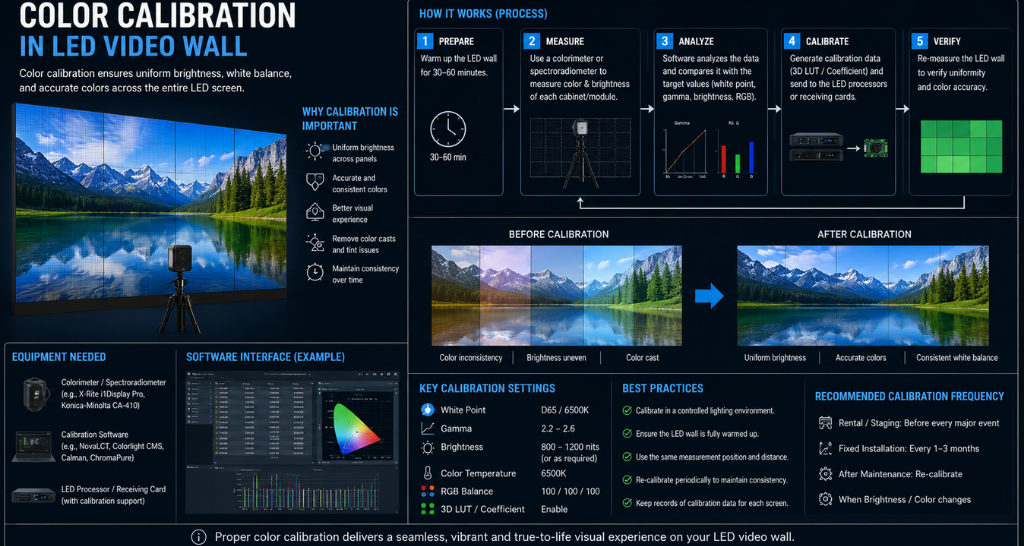
An LED Video Wall is designed to deliver vibrant visuals, accurate colors, and seamless image quality across large display surfaces. Whether installed in corporate boardrooms, control centers, retail environments, auditoriums, command centers, or outdoor advertising locations, an LED Video Wall must maintain consistent color reproduction to ensure a professional viewing experience.
However, even the highest-quality LED Video Wall can suffer from color inconsistencies due to manufacturing tolerances, aging LEDs, environmental conditions, and varying brightness levels. This is where LED video wall color calibration becomes essential. Proper calibration ensures that every LED module displays identical colors, brightness, and grayscale performance, creating a uniform and visually appealing display.
Understanding the display color calibration process helps organizations maximize display performance, improve visual accuracy, and extend the lifespan of their investment. Through systematic LED screen color adjustment, businesses can achieve broadcast-quality visuals and maintain a consistent brand presentation across all digital displays.
What Is LED Video Wall Color Calibration?
LED video wall color calibration is the process of measuring, adjusting, and synchronizing color output across all LED panels within a video wall system. The goal is to ensure that every module displays identical colors, brightness levels, and grayscale values.
Since an LED Video Wall consists of numerous LED cabinets and modules, slight variations naturally occur during manufacturing. Without calibration, these differences can create visible color shifts, brightness inconsistencies, and uneven image quality.
The display color calibration process uses specialized sensors, cameras, calibration software, and control systems to analyze display performance and automatically correct discrepancies.
Key calibration parameters include:
- Brightness uniformity
- White balance
- Color temperature
- RGB color matching
- Gamma correction
- Grayscale consistency
- Contrast optimization
Through advanced LED screen color adjustment, all modules work together as a single cohesive display.
Why Color Calibration Matters in LED Video Wall Systems
1. Ensures Uniform Image Quality
One of the primary goals of LED video wall color calibration is maintaining consistent image quality throughout the display.
Without calibration:
- Some panels may appear brighter
- Certain areas may show different color tones
- Whites may look yellow or blue
- Images may appear patchy
A proper display color calibration process ensures that every section of the LED Video Wall looks identical, eliminating distracting visual inconsistencies.
2. Improves Color Accuracy
Many applications require precise color reproduction.
Examples include:
- Broadcasting studios
- Corporate branding displays
- Digital signage networks
- Retail advertising
- Educational institutions
Accurate LED screen color adjustment ensures colors appear exactly as intended, preserving brand identity and content integrity.
3. Enhances Viewer Experience
People instantly notice uneven brightness and color mismatches.
A calibrated LED Video Wall delivers:
- Smooth gradients
- Rich color depth
- Natural skin tones
- Consistent visuals
- Better readability
This improved visual experience increases audience engagement and creates a more professional presentation environment.
4. Supports High-Resolution Content
Modern content is produced using advanced color standards.
When displaying:
- 4K content
- 8K content
- HDR visuals
- Live video feeds
Accurate LED video wall color calibration becomes critical for preserving image quality and preventing color distortion.
The display color calibration process ensures every pixel contributes to a precise and balanced image.
5. Maintains Brand Consistency
Retail stores, corporate offices, and digital advertising networks rely heavily on visual branding.
Colors must remain consistent across:
- Logos
- Product images
- Marketing campaigns
- Corporate presentations
Regular LED screen color adjustment helps maintain uniform branding regardless of display size or location.
Common Causes of Color Inconsistenc
Several factors can affect the color performance of an LED Video Wall.
Manufacturing Variations
No two LEDs are perfectly identical. Small differences in LED chips can result in color deviations.
Aging LEDs
Over time LEDs gradually lose brightness and color intensity.
Different modules may age at different rates, creating visible color differences.
Environmental Conditions
Temperature and humidity can influence LED performance.
Outdoor displays are particularly susceptible to environmental changes.
Power Variations
Voltage fluctuations can impact brightness and color output.
Long-Term Operation
Displays operating continuously for extended periods often require periodic LED video wall color calibration to maintain consistency.
Understanding the Display Color Calibration Process
The display color calibration process involves multiple stages designed to optimize visual performance.
Step 1: Initial Measurement
Specialized cameras and sensors capture:
- Brightness levels
- RGB values
- Color temperature
- Gamma performance
This establishes a baseline for calibration.
Step 2: Data Analysis
Calibration software analyzes collected measurements and identifies differences between panels.
The system detects:
- Brightness deviations
- Color mismatches
- Grayscale inconsistencies
Step 3: LED Screen Color Adjustment
The software automatically performs LED screen color adjustment by modifying:
- Red intensity
- Green intensity
- Blue intensity
- Brightness levels
- Gamma settings
Each panel receives customized correction values.
Step 4: Verification
The system re-measures the display after calibration.
This verifies that all corrections have been applied successfully.
Step 5: Ongoing Maintenance
The display color calibration process should be repeated periodically to compensate for aging LEDs and environmental changes.
Regular maintenance ensures the LED Video Wall continues performing at peak quality.
Key Components Used in Color Calibration
Calibration Cameras
High-precision cameras capture detailed color and brightness information.
These devices play a central role in LED video wall color calibration.
Light Sensors
Sensors measure luminance levels and assist with accurate LED screen color adjustment.
Calibration Software
Advanced software processes measurements and generates correction algorithms.
Functions include:
- Color correction
- Brightness balancing
- White balance adjustment
- Gamma optimization
Video Processors
Video processors apply calibration settings to the LED Video Wall in real time.
Control Systems
Centralized control systems manage calibration profiles and automate future adjustments.
Applications That Require Color Calibration
Corporate Boardrooms
Professional presentations demand consistent visuals and accurate branding.
Proper LED video wall color calibration helps maintain presentation quality.
Broadcast Studios
Television production environments require highly accurate color reproduction.
The display color calibration process ensures cameras capture correct colors without distortion.
Command and Control Centers
Mission-critical environments rely on visual accuracy for monitoring and decision-making.
Consistent LED screen color adjustment improves data visibility.
Retail Displays
Retail businesses use LED Video Wall installations to showcase products with realistic colors and appealing visuals.
Auditoriums and Event Venues
Large venue displays benefit significantly from calibration, ensuring every audience member sees consistent content.
Outdoor Advertising
Outdoor installations face varying environmental conditions and require routine LED video wall color calibration to maintain image quality.
Benefits of Regular LED Screen Color Adjustment
Organizations that schedule regular LED screen color adjustment gain several advantages:
Better Visual Consistency
Uniform colors improve professional appearance.
Longer Display Lifespan
Proper calibration reduces strain on LEDs and helps maintain balanced operation Audio Visual Technologies integrate displays, sound systems, control solutions, and collaboration tools to deliver seamless communication, enhanced presentations, immersive experiences, and efficient information sharing across environments.
Improved Energy Efficiency
Optimized brightness settings can reduce power consumption.
Reduced Maintenance Costs
Early detection of performance issues prevents larger problems later.
Enhanced ROI
A well-maintained LED Video Wall delivers reliable performance and greater long-term value.
Challenges in LED Video Wall Color Calibration
Despite its benefits, calibration presents several challenges.
Large Display Sizes
Bigger video walls require more measurement points and longer calibration times.
Outdoor Conditions
Changing sunlight and weather conditions complicate calibration efforts.
Aging Components
Older modules may require more aggressive corrections.
Mixed Panel Installations
Replacing damaged panels with newer units often introduces color mismatches that require immediate LED screen color adjustment.
Future Trends in LED Video Wall Color Calibration
The future of LED video wall color calibration is becoming increasingly automated and intelligent.
Emerging technologies include:
- AI-driven calibration systems
- Real-time color monitoring
- Self-calibrating LED modules
- Cloud-based management platforms
- Advanced HDR optimization
- Automated brightness adaptation
- These innovations will simplify the display color calibration process while improving accuracy and reducing maintenance requirements.
Impact of Color Calibration on LED Video Wall Performance
The impact of effective LED video wall color calibration extends beyond aesthetics. It directly influences audience engagement, operational efficiency, and display reliability. A properly calibrated LED Video Wall delivers superior visual quality, enhanced readability, accurate color reproduction, and improved consistency across every panel. Businesses can confidently present branded content, broadcasters can maintain production standards, and control rooms can rely on accurate visual information. Ultimately, regular calibration transforms a standard display into a high-performance visual communication platform that supports long-term operational success.
Lightomated’s Expertise in LED Video Wall Integration
Lightomated delivers end-to-end LED Video Wall solutions with a strong focus on visual accuracy, performance optimization, and long-term reliability. The company utilizes advanced LED video wall color calibration techniques to ensure every installation achieves consistent brightness, accurate color reproduction, and seamless image quality.
From system design and deployment to ongoing maintenance, Lightomated follows a comprehensive display color calibration process using professional calibration tools, intelligent processors, and expert engineering support. Whether for corporate environments, auditoriums, retail spaces, command centers, or large-scale digital signage networks, Lightomated provides precise LED screen color adjustment services that maximize display performance, improve viewer experience, and protect the client’s technology investment for years to come.