How Does an Outdoor LED Displays Get Cooling: Understanding the Cooling System?
In digital signage technology, Outdoor LED Displays have become a powerful medium for advertising, live events, stadium screens, transportation hubs, and public information systems. These displays are designed to operate in harsh environmental conditions such as direct sunlight, dust, humidity, and extreme temperatures.
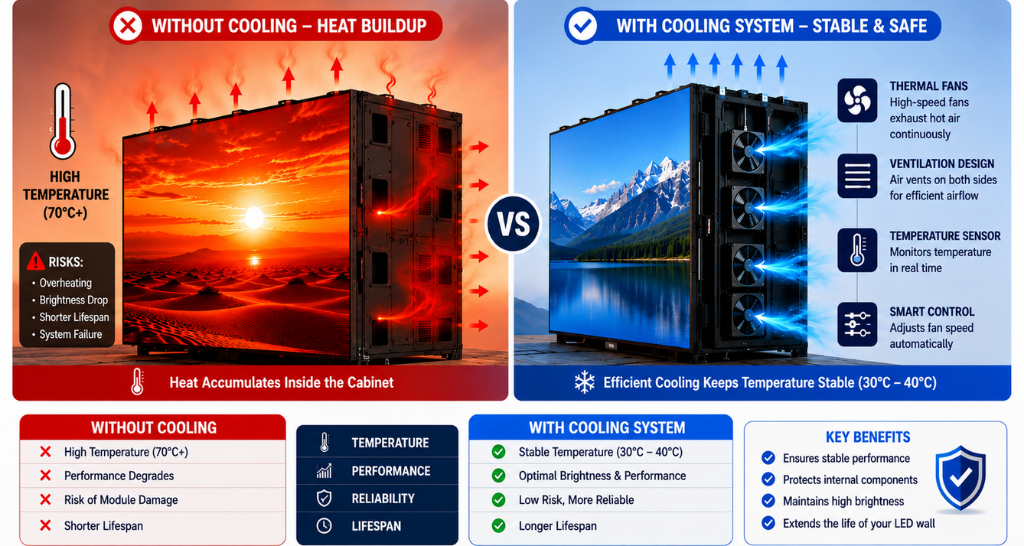
One of the biggest challenges for Outdoor LED Displays is heat generation. Continuous operation of high-brightness LEDs, power systems, and control components creates internal heat. If this heat is not managed properly, it can severely impact performance and lifespan.
To solve this issue, modern systems rely on thermal control solutions such as LED display cooling fans, optimized airflow design, and advanced LED display cooling system architecture. These systems ensure proper outdoor LED screen heat management, preventing overheating and maintaining stable performance.
Without effective cooling, even high-quality Outdoor LED Displays can face brightness loss, pixel damage, or system failure. That is why cooling technology is a core requirement, not an optional feature.
What is the technology behind?
The cooling technology used in Outdoor LED Displays is a thermal management system designed to regulate internal temperature by removing excess heat generated during operation.
It includes LED display cooling fans, ventilation channels, heat sinks, and temperature sensors that work together as a unified LED display cooling system.
The main objective of this system is LED display overheating protection, ensuring all internal components such as LED modules, SMPS units, and receiving cards remain within safe temperature limits.
In simple terms, it is a built-in heat control mechanism that keeps Outdoor LED Displays stable, efficient, and safe in outdoor environments.
Why is it Important?
Heat is one of the most critical factors affecting the performance of Outdoor LED Displays. When internal temperature rises beyond safe limits, it directly impacts image quality and system reliability.
Without proper outdoor LED screen heat management, several issues can occur:
- Reduced brightness output
- Color inconsistency
- Pixel degradation
- Signal instability
- System shutdown
Research shows that LED lifespan can reduce by up to 50% when operating above optimal temperature levels. This makes LED display overheating protection extremely important for long-term usage.
Cooling systems ensure stable performance even under continuous operation and extreme weather conditions.
How Does It Work?
The cooling system in Outdoor LED Displays works on continuous airflow and heat exchange principles.
Working Process:
- Internal components generate heat during operation
- Heat accumulates inside the cabinet
- LED display cooling fans start circulating air inside the enclosure
- Hot air is pushed out through exhaust vents
- Fresh air enters through intake openings
- Continuous airflow maintains stable internal temperature
- Sensors adjust fan speed based on heat levels
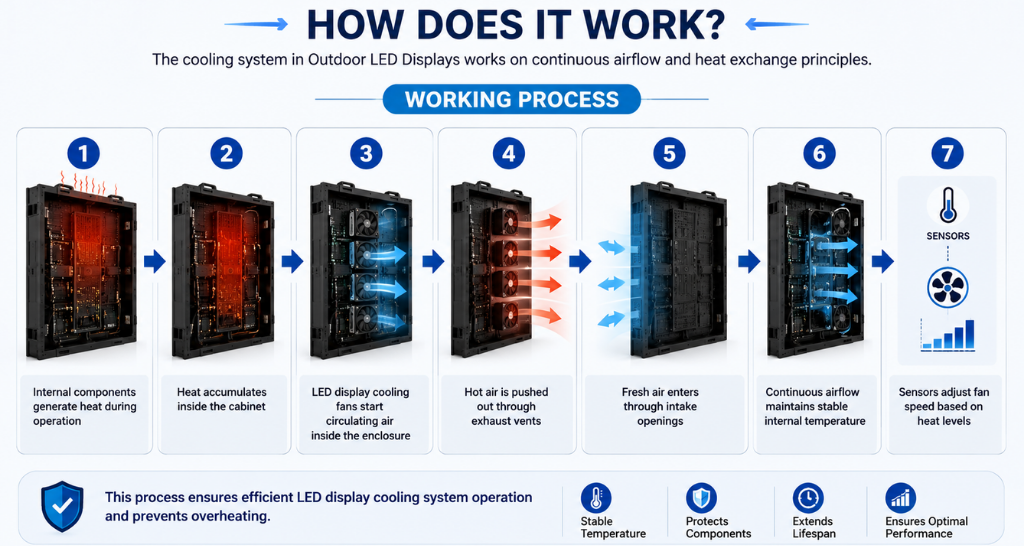
This process ensures efficient LED display cooling system operation and prevents overheating.
4. Where Does the Heat Come From?
Heat generation is natural in Outdoor LED Displays because they are high-power electronic systems that run continuously.
Main heat sources:
LED Modules
High brightness output continuously generates heat during operation.
Power Supply (SMPS)
Electrical conversion from AC to DC produces heat as a byproduct.
Receiving Cards
Small amount of heat is generated during data processing and signal handling.
Continuous Operation Load
Long operating hours (12–24 hours) lead to cumulative heat buildup inside the cabinet.
Result:
If there is no proper LED display cooling system, the internal cabinet temperature rises rapidly and becomes unsafe for operation.
5. What Happens If Fans Are Not There?
If cooling fans are not installed or fail, Outdoor LED Displays can face serious performance and hardware issues.
Possible problems:
Display overheats
Internal temperature can reach unsafe levels, risking component damage.
Brightness reduction
Heat affects LED efficiency, leading to lower brightness output.
Pixel damage
Excess heat can permanently damage LED pixels and modules.
System hang or shutdown
Protection systems may activate, or the display may crash or turn off.
Reduced lifespan
Long-term overheating significantly reduces the overall lifespan of the display.
How Does an Outdoor Video Wall Get Cooling?
Outdoor video walls (LED displays) use airflow and heat management systems to maintain the temperature. Since outdoor environments expose displays to sunlight and continuous operation, the internal cabinet temperature can increase significantly. Cooling systems help control this heat and protect the components and
Audio Visual Integration combines sound, video, and control systems into one seamless setup for better communication, smart control, and enhanced user experience in modern environments.
1. Cooling Fans (Air Circulation)
- High-speed cooling fans are installed inside the LED cabinet.
- These fans remove hot air from inside the cabinet.
- They bring comparatively cooler fresh air inside to maintain temperature.
2. Ventilation System
- LED cabinets have air intake and exhaust vents.
- Fresh air enters through the intake vents, while hot air is pushed out.
- This keeps LED modules, power supplies, and control cards at a stable temperature.
3. Heat Sink & Thermal Design
- Heat sinks are used with LED modules and electronic components.
- They absorb extra heat and help distribute it away from sensitive parts.
4. Air Conditioner / Cooling Unit (For Large Displays)
- Large outdoor video walls or displays installed in extremely hot areas may use cabinet AC or industrial cooling units.
- These systems maintain a controlled internal temperature.
5. Smart Temperature Control
- Sensors monitor the cabinet temperature.
- When the temperature rises, fan speed automatically increases to improve cooling.
6. Weatherproof Cabinet Design
- Outdoor LED cabinets are designed with proper IP protection to prevent dust and water entry while maintaining airflow.
In simple words:
LED modules generate heat → fans remove hot air → fresh air enters → temperature stays controlled → display performance and lifespan improve.
Benefits of Cooling Systems in Outdoor LED Displays :
Cooling systems provide multiple advantages:
- Prevent overheating in Outdoor LED Displays
- Improve brightness consistency
- Increase lifespan up to 40%
- Reduce failure rate significantly
- Enhance system reliability
- Lower maintenance cost
Facts and Figures:
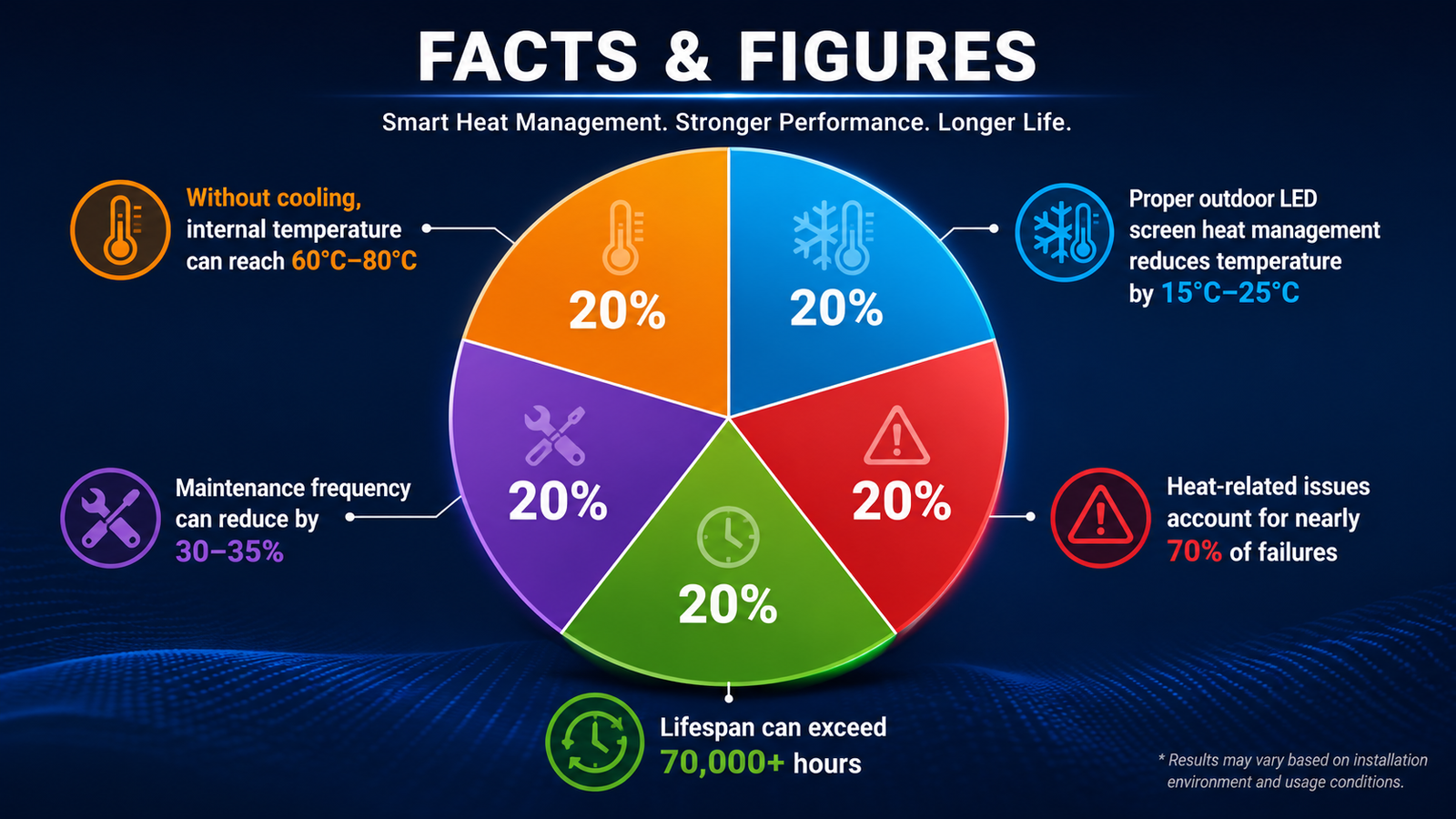
- Without cooling, internal temperature can reach 60°C–80°C
- Proper outdoor LED screen heat management reduces temperature by 15°C–25°C
- Heat-related issues account for nearly 70% of failures
- Lifespan can exceed 70,000+ hours with proper cooling
- Maintenance frequency can reduce by 30–35%
How Lightomated Helps in Outdoor LED Displays
Lightomated ensures high-performance Outdoor LED Displays with advanced thermal engineering and smart cooling design.
Their solutions include:
- High-efficiency LED display cooling fans
- Optimized LED display cooling system architecture
- Smart airflow-based cabinet design
- Advanced outdoor LED screen heat management systems
- Built-in LED display overheating protection technology
This ensures stable performance in extreme conditions like highways, stadiums, rooftops, and outdoor advertising installations.