Real-Time Monitoring in Control Rooms Begins with the Right LED Video Wall
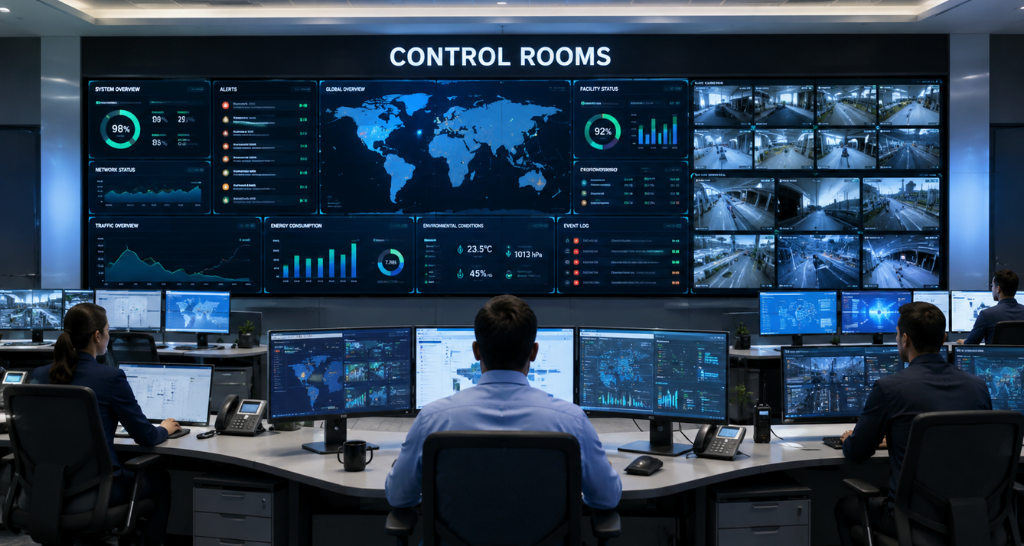
Every second matters. Whether it’s a Security Operations Center (SOC), Network Operations Center (NOC), traffic management center, utility control room, manufacturing facility, airport, or emergency response center, operators rely on real-time information to make quick and accurate decisions. The ability to view multiple data sources simultaneously can mean the difference between preventing an incident and responding after the damage is done.
Unfortunately, many organizations still depend on outdated LCD video walls, projectors, or multiple standalone monitors. These legacy display systems create fragmented visuals, visible bezels, inconsistent brightness, and limited scalability. As the volume of surveillance feeds, dashboards, and operational data continues to grow, traditional displays struggle to provide the clarity and flexibility that modern control rooms require.
This is where an LED Video Wall becomes a game-changing solution. Instead of forcing operators to switch between multiple screens, an LED Video Wall creates one seamless display where critical information is always visible. From live CCTV feeds and SCADA dashboards to GIS maps and performance analytics, everything can be monitored in real time on a single platform.
A professionally designed LED Video Wall for Control Rooms not only improves visibility but also enhances situational awareness, reduces response times, and supports uninterrupted 24/7 operations. Investing in the right display technology today helps organizations build a future-ready monitoring environment that improves efficiency, collaboration, and decision-making.
Why Real-Time Monitoring Depends on Display Technology?
Real-time monitoring is only effective when operators can clearly see and interpret the information displayed in front of them. Delayed alerts, unclear visuals, or fragmented displays can slow decision-making and increase operational risks.
Modern control rooms process information from:
- CCTV surveillance systems
- Building Management Systems (BMS)
- SCADA platforms
- Network monitoring tools
- Cybersecurity dashboards
- GIS and mapping software
- Emergency communication systems
- Industrial automation platforms
A high-performance LED Video Wall ensures all these data sources are displayed simultaneously with exceptional clarity and consistency. Instead of managing multiple disconnected screens, operators can focus on responding to events quickly and accurately.
Why Should You Upgrade Your Control Room?
As operational demands increase, outdated display technologies can become a bottleneck rather than an asset. Upgrading to a modern LED Video Wall provides significant operational advantages.
Better Situational Awareness
Operators can monitor multiple applications on a single display without switching between screens.
Faster Decision-Making
Clear visuals and centralized information allow teams to identify incidents quickly and respond without delays.
Improved Collaboration
A shared display enables operators, supervisors, and decision-makers to view the same information at the same time.
Reliable 24/7 Performance
Unlike many traditional display systems, a professional LED Video Wall is built for continuous operation in mission-critical environments.
Future Scalability
As monitoring requirements grow, additional LED cabinets can be integrated without replacing the existing display infrastructure.
What Happens If You Don’t Upgrade?
Many organizations postpone upgrading because their current display system still functions. However, the hidden costs of outdated technology can be significant.
Reduced Operational Visibility
Multiple standalone displays make it difficult to monitor all critical information simultaneously.
Slower Response Times
Operators spend valuable time switching between applications instead of focusing on incident response.
Higher Maintenance Costs
Older display systems often require more frequent repairs, replacement parts, and maintenance.
Limited Expansion
Adding more monitors increases complexity and consumes valuable control room space.
Operator Fatigue
Poor image quality, visible bezels, and inconsistent brightness reduce visual comfort during long monitoring shifts.
A modern LED Video Wall addresses these issues while improving productivity and long-term operational efficiency.
How Does an LED Video Wall Work?
An LED Video Wall combines multiple technologies to deliver seamless, high-resolution visuals for continuous monitoring.
Step 1: Data Collection
Information is collected from multiple operational systems, including surveillance cameras, sensors, SCADA platforms, building management systems, and network monitoring software.
Step 2: Signal Processing
A video processor receives content from different sources, scales resolutions, synchronizes inputs, and creates customized display layouts.
Step 3: Content Distribution
The processed signal is transmitted through sending cards and receiving cards to individual LED cabinets.
Step 4: Display Output
Thousands of LEDs illuminate simultaneously to produce one seamless image. Operators can display multiple live feeds, dashboards, alerts, maps, and reports on a single LED Video Wall without compromising image quality.
Conventional Displays vs LED Video Wall:
| Feature | Traditional Displays | LED Video Wall |
| Screen Continuity | Visible bezels | Seamless display |
| Brightness | Limited | High and consistent |
| Viewing Angles | Moderate | Wide viewing angles |
| Scalability | Limited | Modular and expandable |
| Maintenance | Higher over time | Lower long-term maintenance |
| Operational Reliability | Suitable for general use | Designed for 24/7 environments |
| Visual Experience | Fragmented | Unified and immersive |
The Foundation of a Smarter Control Room
A modern LED Video Wall is more than just a display it becomes the visual command center where operators monitor, analyze, and respond to critical events with confidence. By providing one centralized platform for real-time information, it helps organizations improve efficiency, reduce operational risks, and prepare for future growth.
Key Components & Technologies Behind an LED Video Wall
The performance of an LED Video Wall depends on several advanced technologies working together. Every component plays a critical role in ensuring reliable visualization, smooth content management, and uninterrupted operation.
1. Fine Pixel Pitch LED Modules
Pixel pitch determines the distance between individual LEDs. Smaller pixel pitches provide sharper images and better readability, making them ideal for control rooms where operators need to monitor detailed maps, dashboards, and surveillance feeds.
2. LED Cabinets
Multiple LED cabinets are assembled to create one seamless display surface. Their modular design allows organizations to expand the display as operational requirements grow without replacing the existing system.
3. Video Processor
A video processor receives inputs from multiple sources, including CCTV cameras, SCADA systems, network monitoring platforms, and dashboards. It scales, synchronizes, and distributes content across the LED Video Wall while maintaining image quality.
4. Sending & Receiving Cards
These components transmit digital signals from the processor to each LED cabinet, ensuring every section of the display remains perfectly synchronized.
5. Control Software
Modern control software allows operators to create custom layouts, switch between inputs, schedule content, and monitor the health of the display in real time.
6. Backup Power & Redundancy
Mission-critical environments cannot afford downtime. Redundant power supplies and signal paths help ensure uninterrupted operation even if one component fails.
Facts & Figures:
Modern display technology has become a strategic investment for organizations that depend on real-time decision-making.
- Professional LED displays can operate for up to 100,000 hours under normal operating conditions.
- Fine pixel pitch technology enables operators to view detailed content from shorter viewing distances without compromising image quality.
- Modular LED systems simplify maintenance because individual modules can be serviced without replacing the entire display.
- Wide viewing angles ensure that information remains clear and readable for operators seated across the control room.
- Advanced display controllers support multiple input sources simultaneously, allowing organizations to visualize surveillance feeds, dashboards, GIS maps, and operational data on a single screen.
These advantages make an LED Video Wall an ideal choice for organizations looking to modernize monitoring environments and improve operational efficiency.
How Lightomated Helps?
At Lightomated, we understand that every control room has unique operational requirements. Our team works closely with organizations to design customized LED Video Wall solutions that improve monitoring capabilities, enhance situational awareness, and support future expansion.
Our end-to-end services include:
- Requirement analysis and consultation
- Site survey and display planning
- Pixel pitch selection
- Custom display design
- Professional installation
- System integration
- Testing and commissioning
- User training
- Preventive maintenance
- Annual Maintenance Contracts (AMC)
Beyond command center solutions, Lightomated also provides Indoor LED Video Walls for corporate spaces, educational institutions, and public venues. We integrate display technologies with Audio Visual Integration solutions to create connected workspaces where audio, video, and control systems operate seamlessly. For organizations seeking large-format visualization, our Video Wall Display solutions are designed to deliver exceptional clarity, reliability, and scalability across a wide range of applications.
Whether you’re upgrading a Security Operations Center (SOC), Network Operations Center (NOC), utility monitoring facility, transportation control room, or industrial command center, Lightomated delivers tailored solutions built around your operational goals.