Fine Pitch LED Video Wall for Control Rooms: Built for Continuous Monitoring
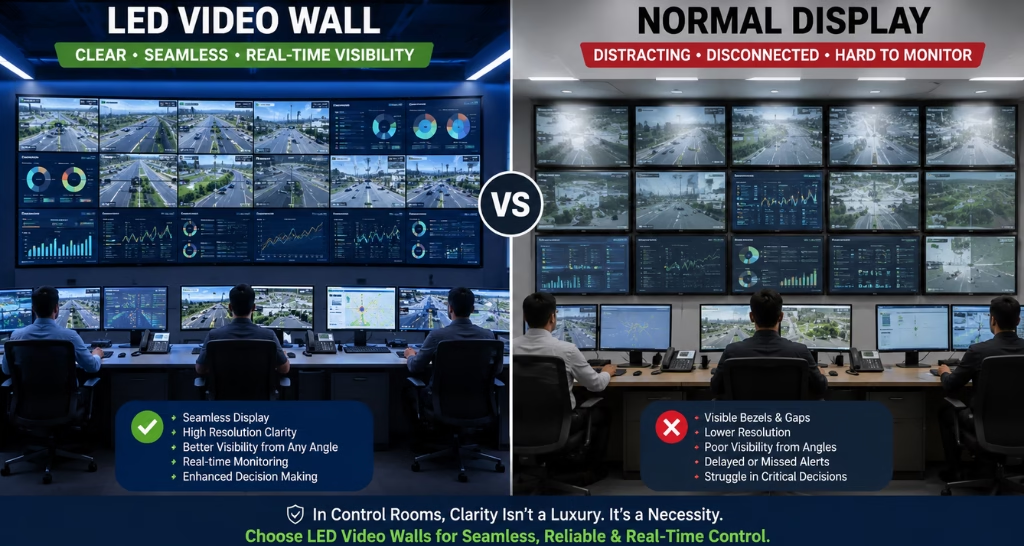
A control room receives an alert about an incident on a busy highway. operators quickly open the relevant CCTV feed, traffic map and incident dashboard. however, the vehicle details are unclear, small dashboard text is difficult to read and part of the map falls behind a display bezel and fine pitch LED displays.
The information is available, but the display system is making it harder to understand. in a control room, this is not just a picture-quality issue. poor visual clarity can delay assessment, communication and response. control rooms continuously display CCTV feeds, alerts, maps, dashboards and equipment status.
Every detail must remain clear across long operating hours. this is where Fine Pitch LED Displays offer a major advantage over conventional display walls. LED video walls for control room deliver seamless presentations, real-time data and engaging visuals across boardrooms, lobbies and meeting areas.
Why Control Rooms Need a Different Display System?
A meeting-room display may operate for a few hours each day. a control-room display may need to operate continuously across multiple shifts. operators monitor several sources at the same time, including:
- Surveillance feeds
- Live alerts
- Operational dashboards
- Traffic or geographic maps
- Equipment status
- Network data
- Emergency messages
- Video conference feeds
Some sources appear across the complete display wall. others are placed in smaller windows. if the display cannot reproduce small text, detailed visuals or multiple feeds clearly, operators may miss important information. control rooms therefore need display systems designed around continuous monitoring rather than occasional presentations and fine pitch LED displays.
Visual Challenges Operators Face During Continuous Monitoring
Small text becomes difficult to read
Operational dashboards contain numbers, labels, charts and status indicators. if the display resolution does not match the screen size or viewing distance, this information may look soft or pixelated.
Operators may need to zoom in or move closer to the screen. this slows down monitoring and makes it difficult to maintain a complete operational view.
Bezels interrupt important content
Conventional LCD video walls are created by placing multiple screens together. each screen has a frame around it. these bezels create visible lines across maps, camera footage and dashboards. a vehicle, person, location or alert may appear directly behind a bezel. this makes the content harder to follow, especially during critical situations also fine pitch LED displays.
Multiple feeds become crowded
A control room may receive feeds from cameras, servers, sensors and monitoring platforms. when several sources share a limited display area, each window becomes smaller. text and video details can become difficult to see.
Brightness and colours appear inconsistent
Screens within a conventional display wall can age differently. one screen may appear brighter or show slightly different colours from the others. this creates an uneven visual surface when a single image is shown across multiple panels.
Visibility changes across the room
Not every operator sits directly in front of the display wall. some people view it from side workstations or supervisory desks. limited viewing angles can reduce image clarity, colour and contrast.
Long viewing hours cause discomfort
Excessive brightness, glare and inconsistent image quality can increase visual fatigue, the display should remain clear without becoming uncomfortable for operators working long shifts and Fine Pitch LED Displays.
What Is a Fine Pitch LED Display?
A Fine Pitch LED Display uses closely spaced LED pixels to produce detailed images at shorter viewing distances. pixel pitch is the distance between the centres of two neighbouring pixels.
It is measured in millimetres. a smaller pixel pitch places more pixels within the same display area. this improves pixel density and helps the display reproduce small text, fine lines, maps and CCTV details clearly. however, choosing the smallest available pixel pitch is not always necessary. the correct pixel pitch depends on viewing distance, screen size, content type and budget.
Conventional Display vs Fine Pitch LED Display:
| Factor | Conventional Display Wall | Fine Pitch LED Display |
|---|---|---|
| Visual continuity | Bezels divide the content | Seamless visual canvas |
| Close viewing | Small details may appear unclear | Higher pixel density improves clarity |
| Screen size | Limited to standard panel sizes | Flexible sizes and proportions |
| Multiple feeds | Layouts may follow screen boundaries | Sources can be placed more freely |
| Viewing angles | Visibility may reduce from the sides | Wider and more consistent viewing |
| Maintenance | Complete screen may need replacement | Individual modules can be serviced |
| Brightness consistency | Differences may develop between screens | Calibration creates a unified output |
| Scalability | Depends on matching screen models | Cabinets can support planned expansion |
| Continuous use | Depends on the display model | Can be designed for extended operation |
Conventional displays are not unsuitable for every control room. a small security room showing a few camera feeds may work effectively with commercial screens. a large command centre monitoring multiple sources can benefit more from a seamless Fine Pitch LED Display.
Problems with Using Normal Displays in Control Rooms
Standard commercial displays are usually available in fixed sizes and aspect ratios. this can restrict how the display wall fits within the room. combining several screens increases the available display area, but also introduces bezels. these physical lines can divide maps, diagrams and surveillance footage. normal screens may also struggle to show small operational data when several sources are displayed together and fine pitch LED displays.
As the number of windows increases, text and video details become smaller. another problem appears when an older display fails. finding the same model can be difficult. a replacement may have different brightness, colour or bezel dimensions. AV integration connects displays, audio, conferencing, control and content-sharing systems to create smooth communication across modern corporate spaces and Fine Pitch LED Displays.
This makes the complete wall look inconsistent. these limitations can force operators to arrange their workflows around the screens instead of displaying information according to operational needs.
How Fine Pitch LED Displays Solve These Problems?
Seamless content presentation
Fine Pitch LED Displays do not have visible bezels between cabinets. maps, dashboards and video feeds can extend across the wall without physical interruptions. this helps operators view complete information without important details falling behind screen borders and fine pitch LED displays.
Better visibility of small details
A suitable pixel pitch improves the clarity of text, charts, numbers and CCTV footage. this becomes important when operators sit close to the display or monitor several sources at once and Fine Pitch LED Displays.
Flexible screen dimensions
LED cabinets can be combined to create different display sizes and proportions. the screen can be designed according to the available wall and required content layouts and Fine Pitch LED Displays.
Better multi-source monitoring
A video processor can position multiple sources anywhere on the LED canvas. critical feeds can be enlarged while secondary information remains visible. saved layouts can also be created for normal monitoring, incident response and emergency situations and fine pitch LED displays.
Consistent viewing across the room
Wide viewing angles help operators and supervisors see the same information from different positions. this supports better collaboration during fast-moving situations.
Easier module-level maintenance
Fine Pitch LED Displays consist of replaceable modules and cabinets. if one section develops a fault, technicians can service the affected module instead of replacing the entire screen. front-service access can make maintenance easier where space behind the wall is limited.
Key Benefits for Control Rooms:
A Fine Pitch LED Display provides more than a larger picture. it creates a shared visual surface that supports faster understanding and decision-making and fine pitch LED displays.
Major benefits include:
- Clear text and dashboard data
- Better visibility of CCTV details
- Seamless maps and diagrams
- Flexible content layouts
- Wide viewing angles
- Scalable screen sizes
- Modular maintenance
- Consistent brightness and colour
- Support for long operating hours
- Improved situational awareness
Is Every Fine Pitch LED Display Suitable for 24×7 Use?
No. a small pixel pitch alone does not make an LED display suitable for continuous monitoring. the complete system must be designed for long operating hours and Fine Pitch LED Displays.
Heat management
LED modules and power components generate heat. poor ventilation can affect display performance and component life. the room and mounting structure must support proper heat management.
Power and signal redundancy
A single power or signal failure should not disable the complete display wall. redundant power supplies, controllers and signal paths can help maintain operation during a component failure.
Brightness control
Maximum brightness is not always suitable for an indoor control room. brightness should match the room lighting and operator viewing distance. Excessive brightness can increase discomfort during long shifts.
Refresh rate
A suitable refresh rate keeps moving content smooth. it also reduces visible scan lines when the display is recorded through cameras.
Service access
Technicians should be able to reach LED modules, power supplies and data components safely. a front-serviceable design can reduce repair time and space requirements.
How to Select the Right Fine Pitch LED Display?
Start by measuring the closest and farthest operator viewing distances. the nearest viewing position is particularly important when selecting pixel pitch.
Next, review the actual content that will appear on the screen. a wall showing detailed dashboards may require a different resolution from one displaying large CCTV feeds. the screen should provide enough space for normal monitoring as well as expanded layouts during incidents.
Room lighting, viewing angles and operator positions must also be considered. sample layouts should be created using real sources before the display is finalised. this confirms whether text, maps and camera feeds will remain readable.
The level of redundancy should depend on the impact of downtime. mission-critical control rooms may require backup controllers, power supplies and signal paths. maintenance access and future expansion should also be included in the planning stage.
How Lightomated Helps Build Reliable Control Room Displays?
Lightomated provides Fine Pitch LED Displays designed around the visual and operational needs of modern control rooms. the process begins with understanding the viewing distance, room layout, content sources and required screen size. based on these factors, the right pixel pitch, resolution and display configuration are recommended.
Also considers brightness consistency, front-service access, heat management and continuous operating requirements. the display can be integrated with video processors and control systems to support multiple feeds and flexible layouts.
From planning and installation to calibration and maintenance support, Lightomated helps create a clear, seamless and reliable monitoring environment for operators.