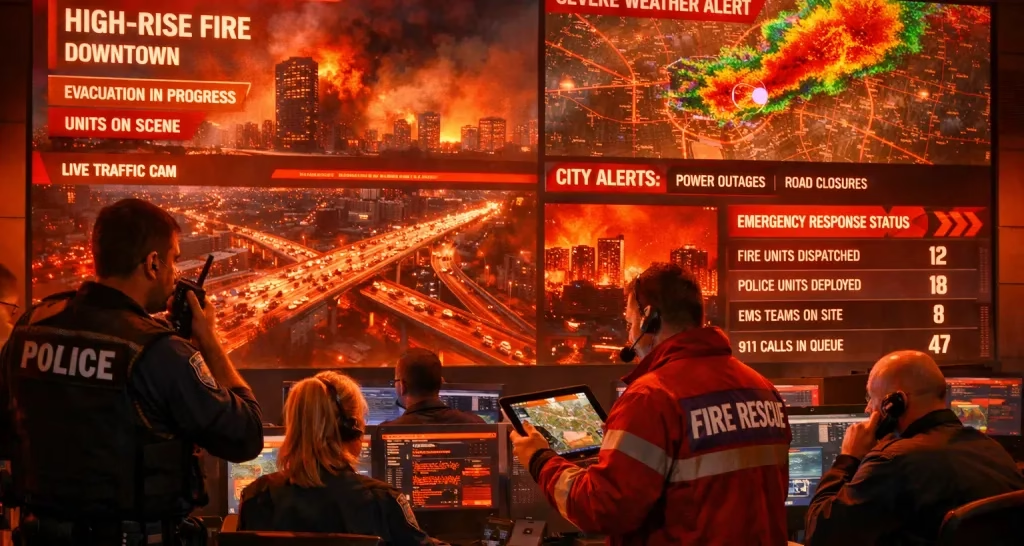
Control Room LED Video Wall for 24/7 Operations
Control Room LED Video Wall solutions are critical in command and control environments where every second matters. One missed detail can mean a delayed decision and in high pressure environments, delays carry real consequences. This is the reality of modern command and control centres, where information must be visible, accurate, and instantly actionable.
Across urban hubs like Delhi, Gurugram, and Noida, control rooms now operate 24×7. They monitor traffic corridors, metro rail systems, utilities, public safety networks, and integrated smart city platforms. As data volume increases and response windows shrink, display systems are no longer just support tools they become operational infrastructure.
This is where a Control Room LED Video Wall moves from a “nice to have” display to a mission critical system that directly impacts decision making, coordination, and uptime.
What Are Common Display Pain Points in Traditional Control Rooms?
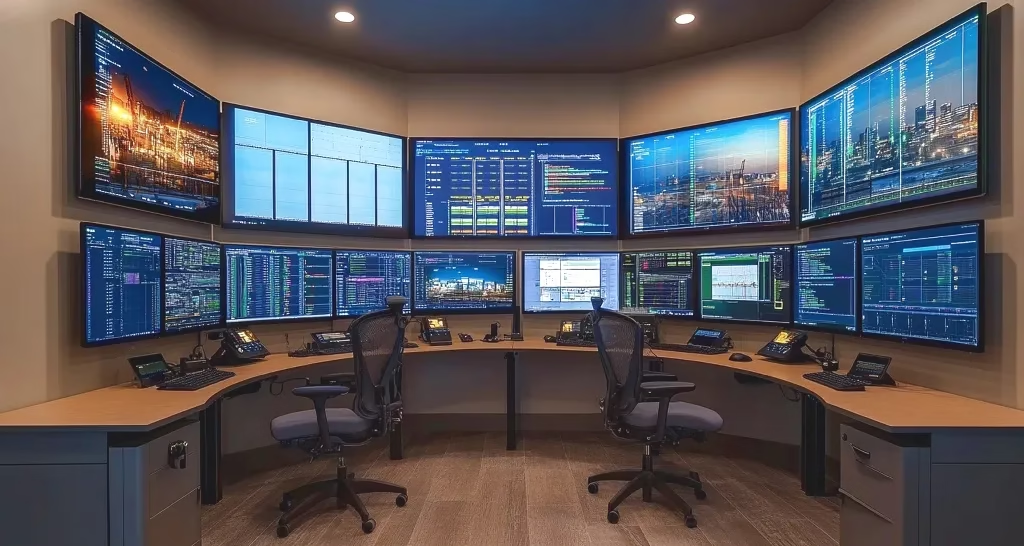
Many legacy control rooms still rely on mixed display setups LCD panels, multiple monitors, and projector based systems. While functional at one time, these setups struggle under modern operational demands.
Common challenges include:
- Too many screens, too little clarity
Operators must scan across multiple displays, increasing cognitive load. - Bezel lines break visual continuity
Critical maps and live feeds get divided, causing missed details. - Poor readability at close viewing distances
Standard displays are not optimized for near field data monitoring. - Glare and reflections
Glass heavy rooms and daylight exposure reduce visibility. - Displays not designed for 24×7 usage
Consumer grade panels fail faster under continuous operation. - Fixed layouts with limited scalability
Expansion often requires a full redesign. - Single point failures create dead zones
One failed screen can compromise an entire section of the display wall.
In dense urban environments like Delhi NCR, these limitations quickly affect overall control room efficiency and response accuracy.
Many traditional control rooms still rely on LCD based video wall setups, which introduce bezel gaps, limited brightness uniformity, and higher failure rates during continuous operation. A technical comparison of LED and LCD video wall technology explains why these limitations become critical in 24×7 control environments.
How Control Room LED Video Wall Systems Solve These Problems?
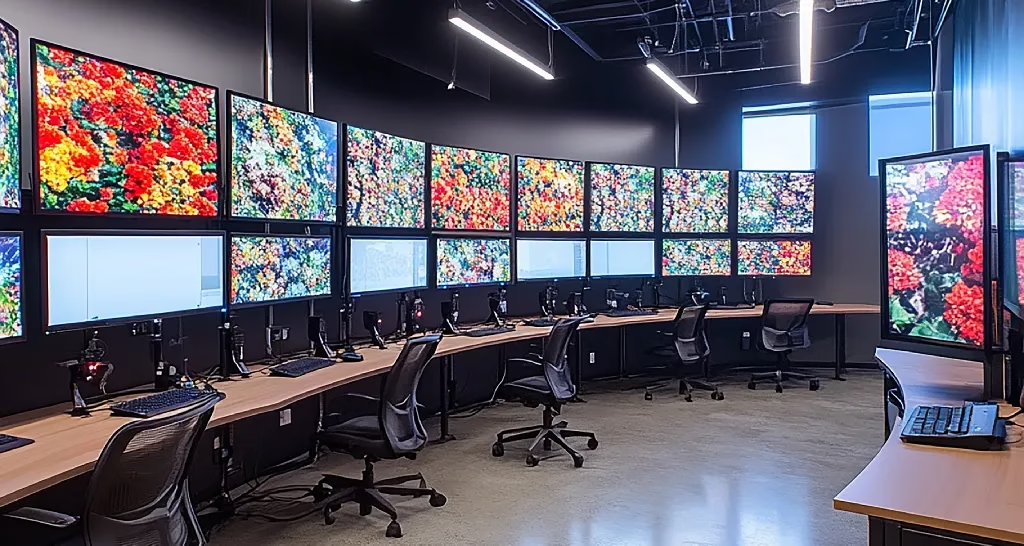
A modern Control Room LED Video Wall eliminates many of the structural and operational issues found in traditional setups.
- Seamless, bezel free canvas
Live data, CCTV feeds, dashboards, and maps appear on one continuous surface. - Consistent brightness in all lighting conditions
High luminance ensures visibility even in daylight filled control rooms. - Low latency performance for live monitoring
Real time feeds stay truly real time essential for traffic and emergency response. - Built for true 24×7 uptime
Industrial grade components support nonstop operations with higher reliability. - Modular architecture
The wall grows as operations expand, without forcing layout changes.
This is why a Control Room LED Video Wall is increasingly becoming the standard display backbone for critical infrastructure projects.
How to Choose the Right Control Room LED Video Wall?
Selecting the right solution requires more than just screen size. Performance, comfort, and scalability all matter.
1. Pixel Pitch vs Viewing Distance
This is one of the most critical decisions.
- 1.5–2 meters viewing distance:
Pixel pitch of 0.9mm or 1.2mm offers superior detail. - 3–5 meters viewing distance:
1.5mm or 1.8mm provides the right balance of clarity and cost.
The rule is simple: closer viewers need finer pixel pitch.
2. Visual Clarity and Operator Fatigue
Control room teams work in front of displays for long hours.
- High refresh rates reduce flicker
- Uniform brightness prevents eye strain
- Accurate color calibration improves data recognition speed
A well configured Control Room LED Video Wall directly supports operator comfort and sustained focus.
Poor visual ergonomics in control rooms has been shown to increase operator fatigue and reduce decision accuracy, especially during long monitoring shifts. Studies on control room safety and human factors highlight the importance of display clarity, layout, and visual comfort in high pressure environments.
(Source: ScienceDirect research on control room safety and ergonomics)
3. Low Latency for Live Environments
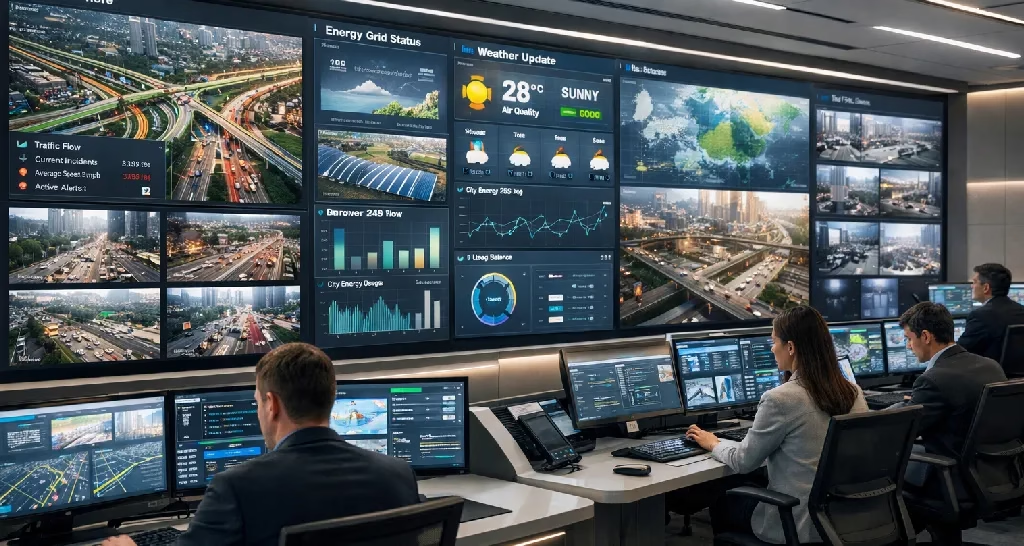
In metro, traffic, and emergency monitoring, delay equals risk.
- Optimized controllers keep latency minimal
- Feeds, alerts, and dashboards stay synchronized
- Decisions are made on live, not delayed, data
This performance advantage makes an LED video wall for control rooms far more reliable than conventional display systems.
4. Scalability for Future Expansion
Infrastructure in Delhi NCR evolves rapidly.
- New data layers are added
- Control room footprints expand
- Monitoring responsibilities increase
A Control Room LED Video Wall scales module by module no redesign, no format lock in, and no operational disruption. This flexibility is essential for modern command and control centers.
Why Delhi NCR Control Rooms Need a Different Display Strategy?
Urban density creates constant data pressure.
- Traffic patterns shift minute by minute
- Metro rail operations demand zero downtime
- Smart city platforms continuously add new sensors and data feeds
Display systems must match this scale, speed, and complexity. That is why a Control Room LED Video Wall is now being specified as a core requirement in NCR government and infrastructure projects, rather than an optional upgrade.