10 Crucial Factors for Selecting the Right LED Video Wall Display
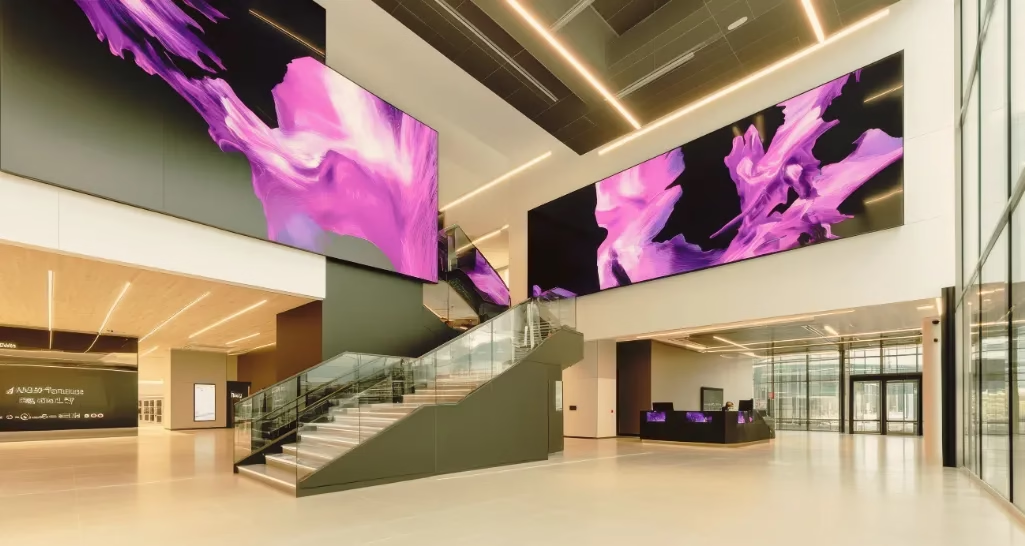
Walk into any modern boardroom, retail showroom, command center, auditorium, or even a university lobby, and one thing stands out is the LED video wall display. It has quietly become the centerpiece of visual communication bright enough to cut through ambient light, sharp enough to display fine detail, and flexible enough to scale into any size or shape.
These video walls deliver visual impact that traditional displays can’t and become the most powerful visual communication. An LED video wall display isn’t just a display, it’s a combination of engineering choices that determine how your content looks, how long the system lasts, and how well it performs in real environments.
Selecting the right LED display requires evaluating the technical factors that directly impact visual quality and user experience. It involves understanding technical specifications, installation requirements, viewing conditions, and long term performance.
This guide simplifies the essential factors you should consider before investing in an LED wall display so you choose a display that’s reliable, future ready, and suited to your environment.
1. Pixel Pitch – LED Video Wall Display
One of the most crucial factors to consider when assessing an LED display is pixel pitch. It measures the distance between individual pixels, directly influencing how sharp and detailed your visuals appear.
How pixel pitch affects your display:
- Smaller pixel pitch = higher clarity
- Larger pixel pitch = ideal for long distance viewing
For close indoor viewing such as conference rooms, studios, command centers, or retail, fine pixel pitch (0.9mm – 2.5mm) is essential to prevent visible gaps.
For medium viewing distances (2.5mm – 3.9mm), clarity remains strong while offering a better price to performance ratio.
For outdoor or long distance environments, larger pitch (4mm – 10mm) works well without unnecessary cost.
Pixel pitch directly determines the sharpness of your LED display, so it must be chosen based on real world viewing distances, not assumptions.
2. Brightness Levels – LED Displays
The screen’s performance in various lighting scenarios is determined by its brightness. Too little brightness, and your content looks dull; too much, and indoor viewers experience unnecessary strain.
Recommended brightness levels:
- Indoor: 600 – 1500 nits
- Outdoor: 4000 – 10,000 nits
Indoor spaces often use controlled lighting, so extreme brightness isn’t required. Retail environments, however, may benefit from brighter indoor video walls to compete with spotlights and daylight through windows.
Outdoor LED displays must remain visible in direct sunlight, which is why high brightness and UV resistant components are essential. The correct brightness ensures your video wall display stays vivid, balanced, and impactful at all times.
3. Video Wall Viewing Distance
Viewing distance determines what pixel pitch is appropriate and how large the display should be. Short viewing distances demand finer pitch for smooth detail, while longer distances allow more flexibility. Matching viewing distance with display specifications is essential for clear, readable content.
- Viewing distance 6 – 10 ft → 1.5 – 2.5mm
- Viewing distance 15 – 20 ft → 2.5 – 3.9mm
- Viewing distance 30+ ft → 4mm+
A properly matched viewing distance ensures the led video wall maintains clear visuals from every angle in the room.
4. LED Display Resolution & Screen Size
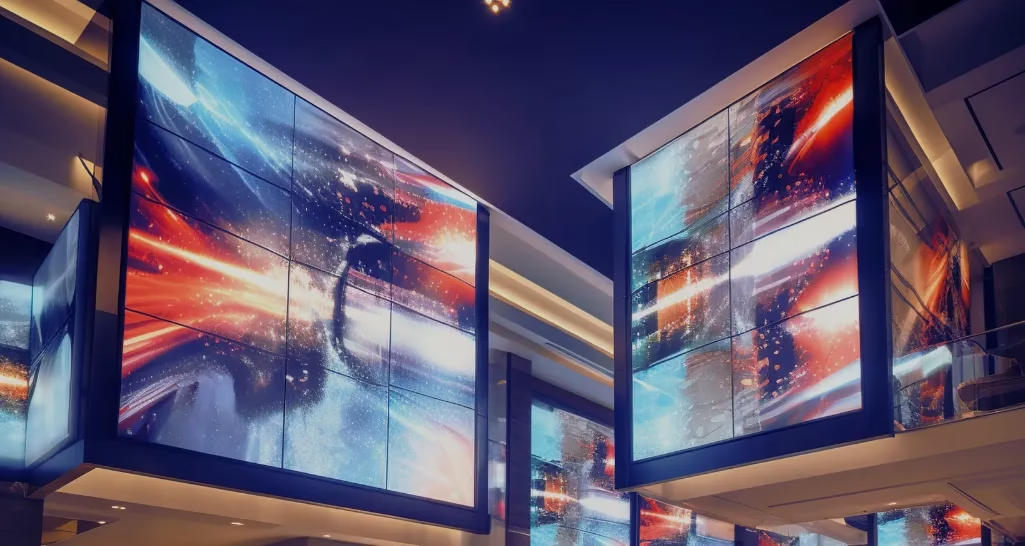
Resolution isn’t just a number, it’s the result of combining pixel pitch with overall screen dimensions. Presentations, detailed visuals, dashboards, and data heavy content demand higher resolution. Branding, motion graphics, and outdoor advertising can perform well at medium resolution. A larger wall needs enough pixel density to keep images sharp, especially when displaying presentations, data, or detailed graphics.
- Corporate meeting rooms → High resolution indoor LED
- Retail stores → Medium pitch LED
- Outdoor hoardings → Lower resolution is fine due to distance
5. Indoor vs Outdoor Considerations
Choosing the right category of LED video wall display ensures your display delivers the perfect balance of visibility, clarity, and durability. Indoor and outdoor LED systems are engineered differently, so selecting the wrong type can significantly reduce performance and lifespan.
Indoor LED video walls are built for close range viewing and controlled lighting conditions. They offer lower brightness levels, finer pixel pitch, and high color accuracy ideal for corporate spaces, studios, retail interiors, and auditoriums. A reliable example is the Vivid Series.
Outdoor LED video walls require higher brightness levels, robust weather protection, and rugged construction to withstand rain, dust, and sunlight. They use a larger pixel pitch and are optimized for long distance viewing in open spaces. A strong outdoor option is the Prism Series
Indoor LED video walls
- Lower brightness
- Smaller pixel pitch
- Designed for close viewing
Outdoor LED video walls
- High brightness
- Weatherproof (IP65+ front panel)
- Larger pixel pitch
Selecting the wrong type leads to reduced lifespan and poor performance, making this a critical choice before installation.
6. Processing Power, Refresh Rate & Image Quality
A high refresh rate ensures smooth motion and flicker free visuals, especially when the wall is filmed or used for live events. A strong video processor enhances color accuracy, contrast, and multi input performance. These factors matter greatly in corporate and entertainment environments where precision and consistency are required.
For smooth video playback, look for:
- High refresh rate (≥ 3840Hz)
- High contrast ratio
- Wide color range
7. Installation & Structure Support
A LED video wall’s performance depends as much on its installation as it does on the panels themselves. Even the highest quality modules will underperform if the mounting structure is weak or improperly aligned. A well engineered support frame keeps every panel perfectly positioned, maintains structural balance, and prevents issues like panel gaps, vibration, or uneven brightness. When the structure is designed correctly, the entire LED video wall display remains uniform, stable, and visually consistent throughout its lifespan.
8. Maintenance, Support & Long-Term Reliability
Like any electronic system, an LED video wall requires routine maintenance to stay consistent. Dust buildup, heat, and long operating hours can impact brightness uniformity, color accuracy, and overall stability. Regular cleaning, calibration, and system health checks help maintain performance and extend the display’s operational life. Working with trained LED technicians ensures issues such as dead pixels, color shifts, alignment errors, or processing faults are identified early and resolved quickly, reducing downtime and preserving visual quality.
9. Scalability & Upgradability
A well designed LED video wall should support easy expansion and upgrading. Modular construction allows individual panels to be replaced, sections to be upgraded, or the screen size to be increased as your space or content requirements evolve. This scalability ensures the system remains useful for years, without requiring a complete replacement when your visual needs grow.
10. Making the Right Selection
Choosing an LED display is a technical decision that affects far more than aesthetics. The right mix of pixel pitch, brightness, resolution, processing quality, structural installation, and serviceability determines whether the LED wall becomes a long term visual asset or a recurring maintenance challenge. A properly engineered LED display elevates your space, strengthens communication, and delivers clarity that traditional screens can’t match. As the demand for large format LED displays continues to grow globally, selecting the right LED video wall is now a long term investment decision backed by strong market growth.
(Reference: Research and Markets – Global Video Wall Market Forecast)
For guidance, design support, or LED solutions suited to your environment, connect with our team at Lightomated. We help organisations select and implement LED systems that perform flawlessly and remain future ready.
(Disclaimer: All technical values provided are indicative reference ranges used across the LED display industry and may vary based on the specific system or installation.)