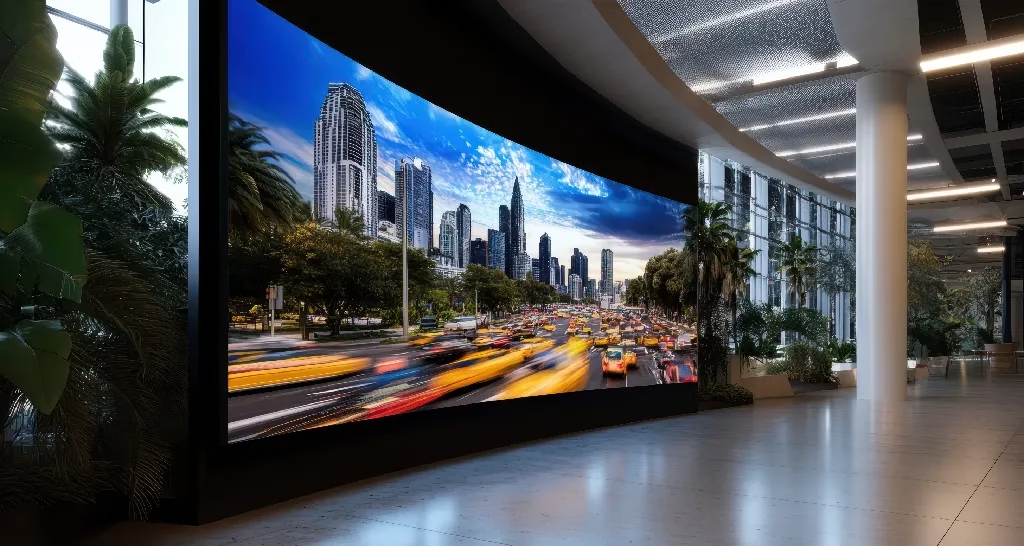
LED Video Wall vs Projector: What to Choose?
Imagine this: you’re in the middle of an important presentation, control room briefing, or public event. The lights are dimmed, the projector is on yet the image still looks washed out. Someone adjusts the focus. Someone else closes the curtains. Minutes pass before the audience can clearly see the content.
This scenario is common across corporates, public venues, control rooms, and large shared spaces. As display requirements become more demanding, many organizations reach a practical question: is a traditional projector still enough, or is it time to upgrade?
This is where the LED Video Wall vs Projector discussion becomes relevant not as a trend driven choice, but as a performance and reliability decision. In this article, we’ll explore when a projector still makes sense, when an LED video wall becomes the better option, and how to decide based on real world usage.
Understanding the Core Difference Between LED Video Walls and Projectors
At a fundamental level, the difference lies in how images are produced.
A projector display system throws light onto a surface and depends heavily on controlled lighting and screen conditions. A Corporate LED Video Wall display, on the other hand, produces its own light through modular LED panels, creating a direct view display.
This distinction affects visibility, consistency, reliability, and scalability key factors when evaluating LED Video Wall vs Projector for modern environments.
Spaces where Projector Still Makes Sense
Projectors are not obsolete. They continue to work well in specific scenarios.
A projector may still be suitable if:
- The space is small to medium sized
- Lighting can be fully controlled
- Usage is occasional rather than continuous
- Content needs are basic (presentations, videos)
- Short term budget constraints are a priority
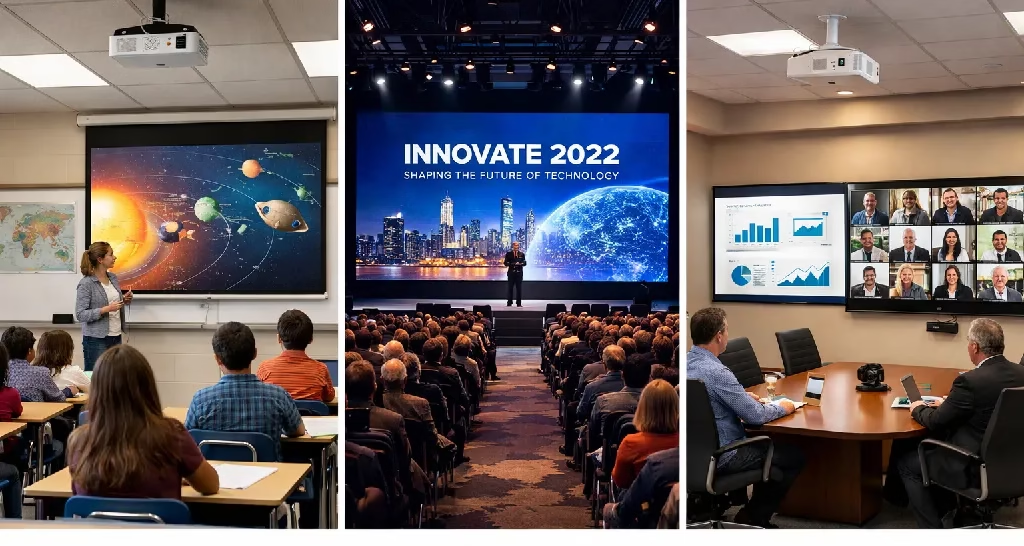
For classrooms, temporary setups, or infrequent presentations, a projector can still meet expectations without immediate need for an upgrade.
Limitations of using Projectors
The comparison between LED Video Wall vs Projector shifts when displays are used more frequently or in demanding conditions.
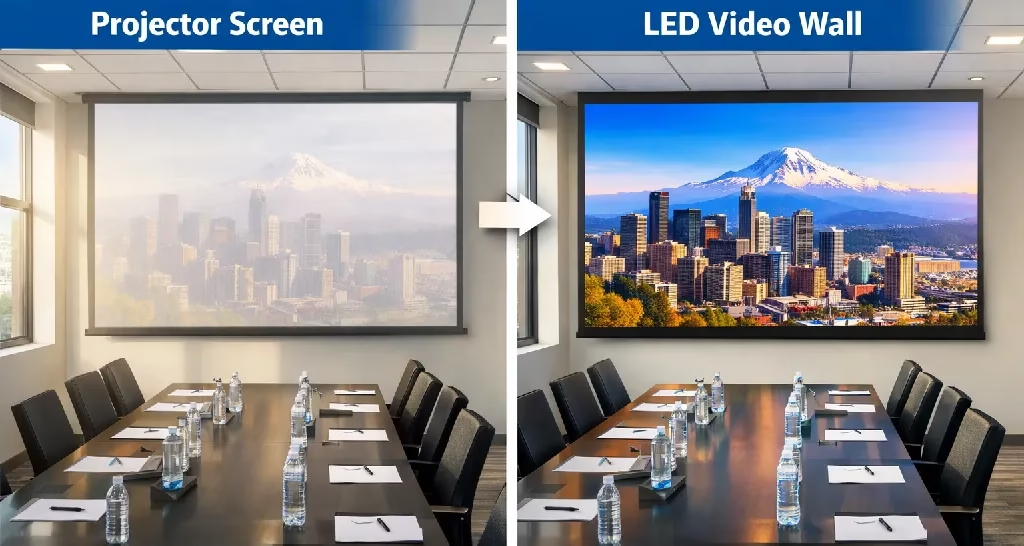
Common projector limitations include:
- Reduced visibility in ambient light
- Image quality degradation over time
- Limited suitability for large format displays
- Inconsistent performance during long operating hours
When displays are used daily, in public facing areas, or in mission critical environments, these issues often become operational challenges rather than minor inconveniences.
When a Video Wall becomes the Better Choice
An LED video wall is not simply a larger screen, it’s a different class of display technology designed for continuous and high impact use.
Upgrading becomes practical when:
- Visibility is required regardless of lighting conditions
- Displays operate for long hours or 24/7
- Content must remain clear at scale
- Reliability is more important than short term savings
In many environments today, the LED Video Wall vs Projector decision is driven by performance consistency rather than aesthetics.
Why choose LED Video Walls over Projectors?
Reliability depends on how a display performs under everyday conditions. When comparing LED Video Wall vs Projector, three technical factors consistently separate the two.
1. Viewing Distance and Pixel Clarity
When comparing LED video walls vs projectors, viewing distance plays a major role in how clearly content is perceived. Projectors tend to lose sharpness as screen size increases, especially when viewers are positioned closer to the display.
LED video walls are specified to maintain clarity across both indoor and outdoor viewing distances:
- Indoor close viewing (1–3 meters): finer pixel pitch such as P1.5–P2.5 for sharp text and detailed visuals
- Indoor medium viewing (3–6 meters): P2.5–P4 for balanced clarity
- Larger indoor or semi open spaces: P4 and above
For outdoor environments, where viewers are positioned farther away:
- 5–10 meters: P4–P6
- 10–20 meters: P6–P8
- Beyond 20 meters: P8 and above
This specification based approach ensures content remains readable without pixelation at any distance, something projectors struggle to achieve consistently, particularly in high resolution or data heavy displays.
2. Brightness Performance in Real Lighting Conditions
Brightness is another key difference in the LED video wall vs projector comparison.
Projectors rely on controlled lighting and often require dimmed rooms to maintain visibility. LED video walls, by contrast, are calibrated to perform reliably in real world lighting conditions.
- Indoor LED video walls: typically operate around 800–1200 nits, delivering comfortable visibility under standard lighting without eye strain
- Indoor spaces with strong ambient light: may require higher brightness with glare control
For outdoor environments:
- LED video walls are engineered for high brightness daylight visibility, maintaining contrast even in direct sunlight
Because LED video walls generate their own light, they maintain color accuracy and visibility indoors and outdoors conditions where projection systems are fundamentally limited.
3. Reliability and Environmental Readiness
Reliability becomes especially important when displays are used for long hours or in exposed environments.
LED video walls are designed for:
- Continuous operation, including 24/7 use cases
- Heat management during extended run times
- Stable performance without frequent recalibration
For outdoor applications specifically, LED video walls are built to withstand:
- Rain, dust, and humidity
- Temperature fluctuations
- Open air installation conditions
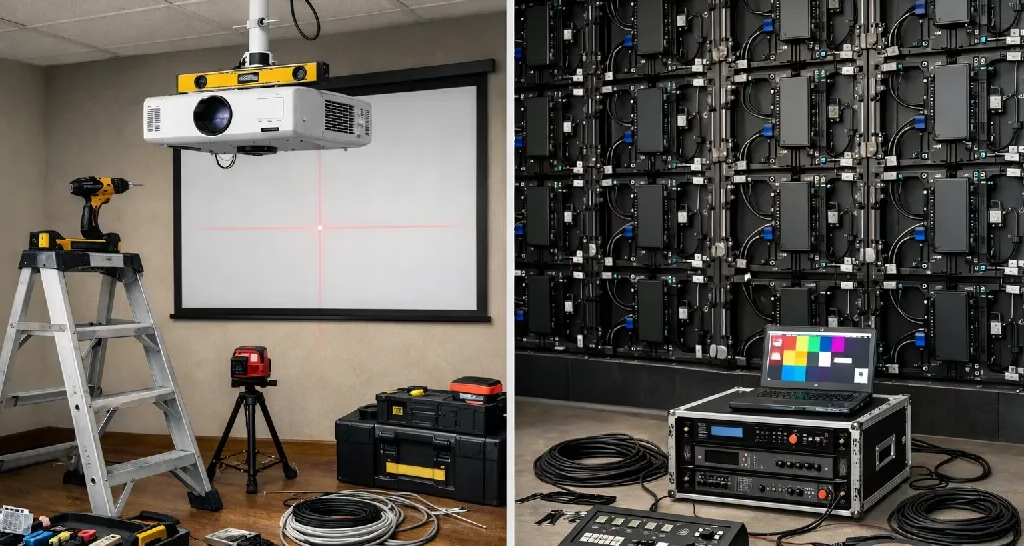
Projectors, on the other hand, are more sensitive to heat, dust, and environmental exposure. They typically require lamp replacements, cooling management, and controlled environments to maintain consistent performance over time.
4. Customization and Display Flexibility
One of the strongest advantages in the LED video wall vs projector comparison is design flexibility.
LED video walls are modular, allowing them to be:
- Customized to fit different wall sizes and layouts
- Configured for seamless, large format displays
- Adapted as display requirements evolve
This flexibility enables displays to scale over time without replacing the entire system something projectors are not designed to support.
The Neo Series LED display, Customizable Indoor Video Wall designed for modern environments where clarity, reliability, and clean integration are essential. Built for controlled indoor spaces, it supports flexible, scalability and consistent performance for applications that require dependable, high quality visuals.
Key factors that affect the upgrade from Projectors to Video Wall
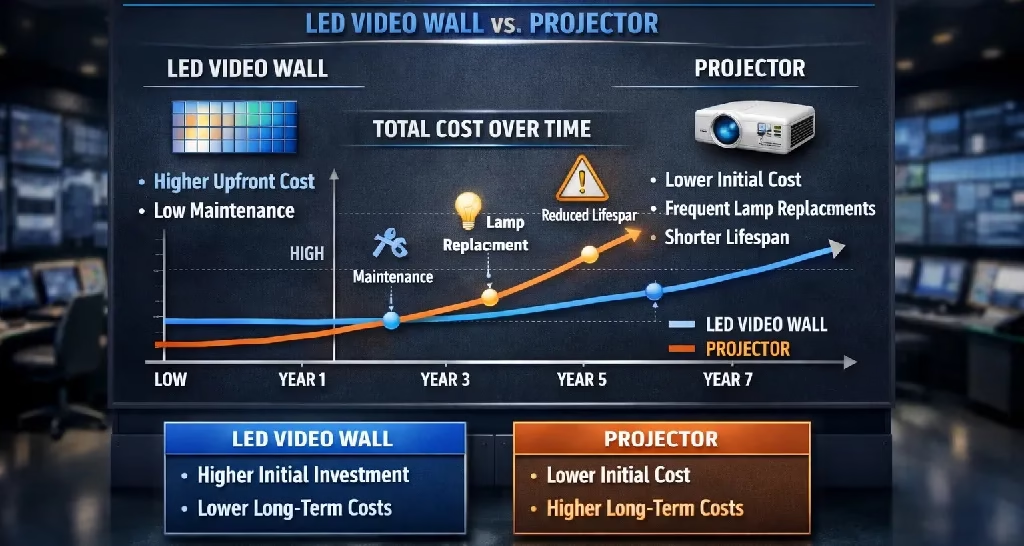
Long Term Cost and Maintenance
Projectors often appear cost effective initially, but ongoing expenses add up over time. Lamp replacements, servicing, and performance degradation increase operational costs.
LED video walls require a higher upfront investment, but they offer:
- Longer operational lifespan
- Minimal routine maintenance
- Consistent brightness over years
From a total cost perspective, LED systems often prove more economical in high usage environments.
Scalability and Future Readiness
Projectors are limited by throw distance and screen size. Expanding a setup typically requires replacing the entire system.
LED video walls are modular:
- Panels can be added to increase size
- Layouts can be reconfigured as spaces evolve
- Systems can integrate with future content platforms
This scalability makes LED video walls better suited for growing organizations and evolving spaces.
Real World Adoption: Control Rooms and Public Spaces
Across smart city command centers, transport hubs, and enterprise control rooms, many organizations have already moved away from projectors.
The reasons are practical:
- Continuous monitoring demands stable visibility
- Multiple data sources must be viewed simultaneously
- Downtime directly affects operations
In these environments, the LED Video Wall vs Projector debate is no longer theoretical LED video walls have become the standard.
Choosing between a projector and an LED video wall depends on how the display is used, not just how it looks.
For occasional use in controlled environments, a projector may still be sufficient. But when visibility, reliability, and scalability become essential, upgrading to an LED video wall is often the smarter long term decision.
LED video walls are increasingly being deployed not just for command centers and public communication, but also because the overall market demand for flexible and high resolution video walls is growing rapidly. (Source: Timestech.in)
If your current display is limiting performance rather than enabling it, it may be time to rethink your setup and plan for what comes next.