LED Displays for Building Facades: Types, Installation & Uses
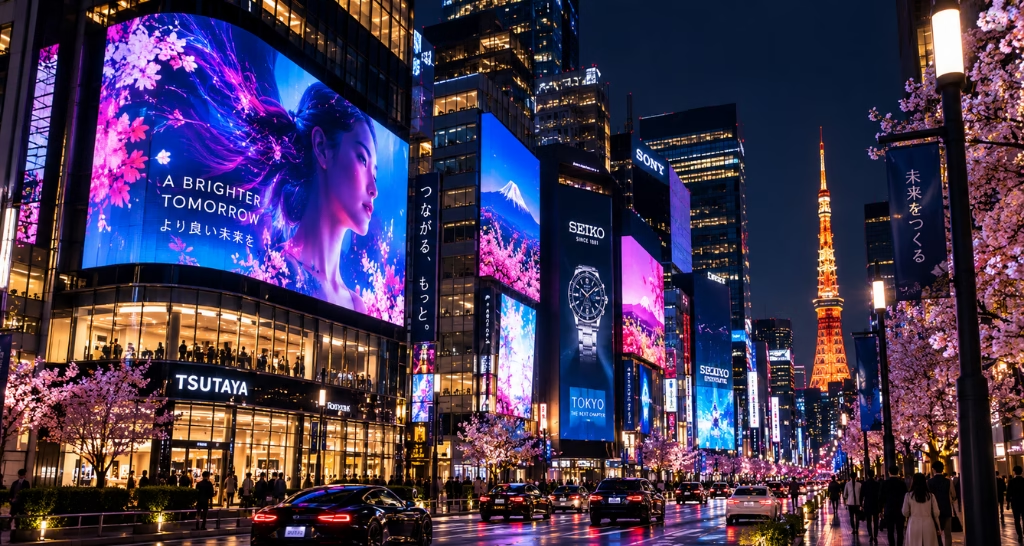
Building facades are becoming more than just the outer structure of a property. Commercial buildings, shopping malls, hotels, corporate offices, and showrooms are using digital displays to attract attention, communicate messages, promote brands, and create dynamic visual experiences.
An Outdoor LED Display is one of the practical options for creating these large-format digital surfaces. Designed for outdoor environments, it can deliver bright and visible content across building exteriors while supporting videos, graphics, advertisements, branding, and architectural visuals.
But which type of LED display is suitable for a building façade? How is it installed? And what should businesses consider before choosing one? this guide explains the basics without getting unnecessarily technical.
Which Types of LED Displays Are Used on Building Facades?
The right display depends on the building structure, viewing distance, sunlight exposure, screen size, and the visual effect required. For most façade projects, three types are commonly considered.
| Display Type | Suitable For | Key Characteristic |
|---|---|---|
| Outdoor LED Display | Building exteriors, malls, hotels | High brightness and weather resistance |
| Transparent LED Display | Glass façades and windows | Allows light and visibility through the screen |
| Mesh LED Display | Large architectural façades | Lightweight and partially transparent |
| Outdoor LED Video Wall | Large advertising surfaces | High-impact digital content |
1. Outdoor LED Display
An Outdoor LED Display is designed specifically for exterior environments. It offers high brightness so content remains visible during daylight and is built with protection against outdoor conditions such as dust and moisture. it is commonly used on solid exterior walls, commercial buildings, malls, hotels, and large advertising surfaces.
2. Mesh or Transparent LED Display
Mesh and transparent LED displays are useful when the building’s existing appearance or visibility through glass needs to be maintained.
These solutions allow light or visibility to pass through parts of the display, making them suitable for glass façades, windows, and architectural applications.
3. Media Facade LED Systems
A media façade uses LED technology as part of the building’s overall exterior design. Instead of simply displaying advertisements, it can create large-scale graphics, animations, patterns, and architectural visuals. the choice between these options depends largely on the façade design and the purpose of the display.
How Is an Outdoor LED Display Installed on a Building Facade?
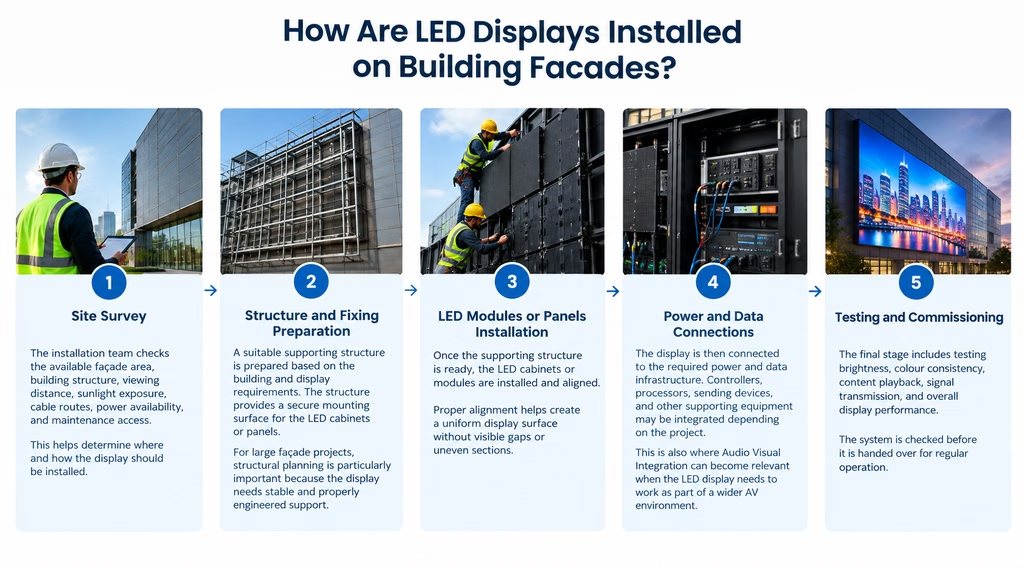
Installing an Outdoor LED Display on a building facade involves several straightforward but important steps.
Site Survey
The process begins with a site survey. The installation team checks the available façade area, building structure, viewing distance, sunlight exposure, cable routes, power availability, and maintenance access.
This helps determine where and how the display should be installed.
Structure and Fixing Preparation
A suitable supporting structure is prepared based on the building and display requirements. The structure provides a secure mounting surface for the LED cabinets or panels.
For large façade projects, structural planning is particularly important because the display needs stable and properly engineered support.
LED Modules or Panels Installation
Once the supporting structure is ready, the LED cabinets or modules are installed and aligned. proper alignment helps create a uniform display surface without visible gaps or uneven sections.
Power and Data Connections
The display is then connected to the required power and data infrastructure. Controllers, processors, sending devices, and other supporting equipment may be integrated depending on the project. this is also where Audio Visual Integration can become relevant when the LED display needs to work as part of a wider AV environment.
Testing and Commissioning
The final stage includes testing brightness, colour consistency, content playback, signal transmission, and overall display performance. the system is checked before it is handed over for regular operation.
A proper site survey and supporting structure are important because façade LED installations must work with the building’s physical conditions, not just the screen specifications.
For projects specifically designed around exterior building surfaces, an Outdoor LED Video Wall for building facade can be planned according to the façade size, viewing distance, outdoor conditions, and content requirements.
Where Can Outdoor LED Displays Be Used on Buildings?
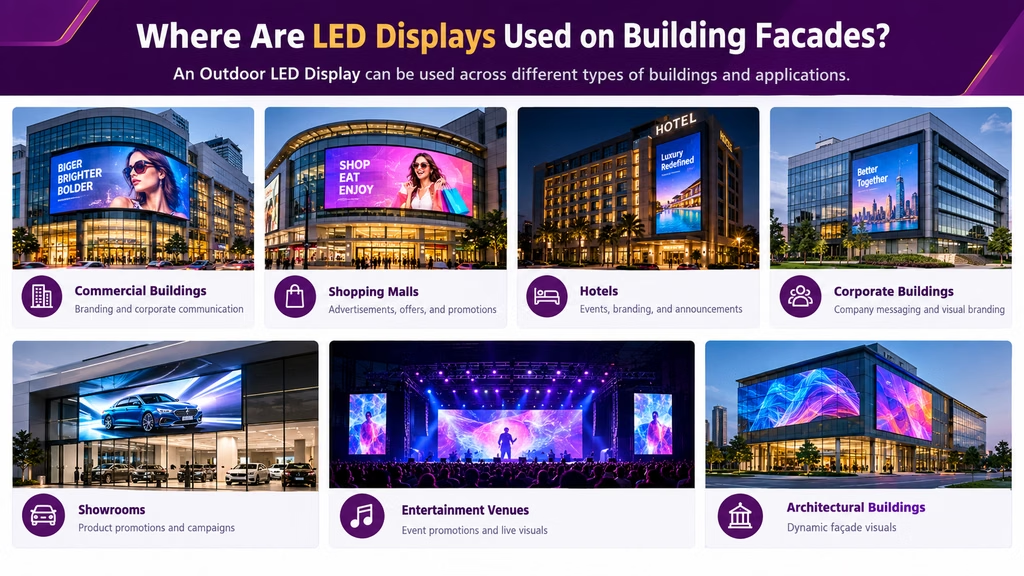
An Outdoor LED Display can be used across different types of buildings and applications.
| Building Type | Common Use |
|---|---|
| Commercial Buildings | Branding and corporate communication |
| Shopping Malls | Advertisements, offers, and promotions |
| Hotels | Events, branding, and announcements |
| Corporate Buildings | Company messaging and visual branding |
| Showrooms | Product promotions and campaigns |
| Entertainment Venues | Event promotions and live visuals |
| Architectural Buildings | Dynamic façade visuals |
For indoor retail environments, businesses may instead consider an Indoor LED Video Wall for retails outlet where weather resistance and high outdoor brightness are not required.
An Outdoor LED Display can also be used for advertising façades where multiple brands, campaigns, or promotional messages need to be shown on a single digital surface.
Unlike static signage, digital LED displays allow businesses to change visual content without physically replacing the signage.
What Should You Consider Before Installing an Outdoor LED Display?
Choosing an Outdoor LED Display should not be based only on screen size. Several practical factors can affect the final solution.
- Building Size: The available façade area determines the possible display dimensions.
- Viewing Distance: People viewing the screen from far away may require a different pixel pitch than people standing close to it.
- Outdoor Brightness: The screen needs sufficient brightness for the expected daylight conditions.
- Weather Protection: Exterior displays need suitable protection against dust, moisture, and changing weather.
- Structural Support: The façade and mounting structure must be suitable for the planned installation.
- Power Requirements: Electrical infrastructure should be considered before installation.
- Maintenance Access: Technicians should be able to access the display for servicing and component replacement.
The correct pixel pitch is usually selected according to viewing distance rather than simply choosing the highest-resolution display available.
Before finalising the display, businesses should evaluate:
| Requirement | What to Check |
|---|---|
| Location | Solid wall, glass façade, entrance, or structure |
| Viewing Distance | Near, medium, or long-distance viewing |
| Sunlight | Direct or indirect sunlight exposure |
| Content | Advertising, branding, video, or architectural visuals |
| Maintenance | Front or rear service access |
| Installation | Available structural and electrical provisions |
The goal is to select a display that fits the building, performs reliably outdoors, and delivers the required visual experience.
Why Choose Lightomated’s LED Display for Building Facades?
Lightomated delivers Outdoor LED Display solutions designed for building façades, with the right display, structure, installation, and support planned around your project. From commercial buildings and malls to hotels and showrooms, we help turn unused façade space into a high-impact digital communication surface.
Make Your Building Stand Out With Lightomated
Upgrade your building façade with a professionally planned Outdoor LED Display from Lightomated.
Talk to our LED display experts today.
📩 info@lightomated.com | 📞 +91 92177 09977
Get Your Facade LED Solution →