Growing Demand for Video Walls in Smart Cities
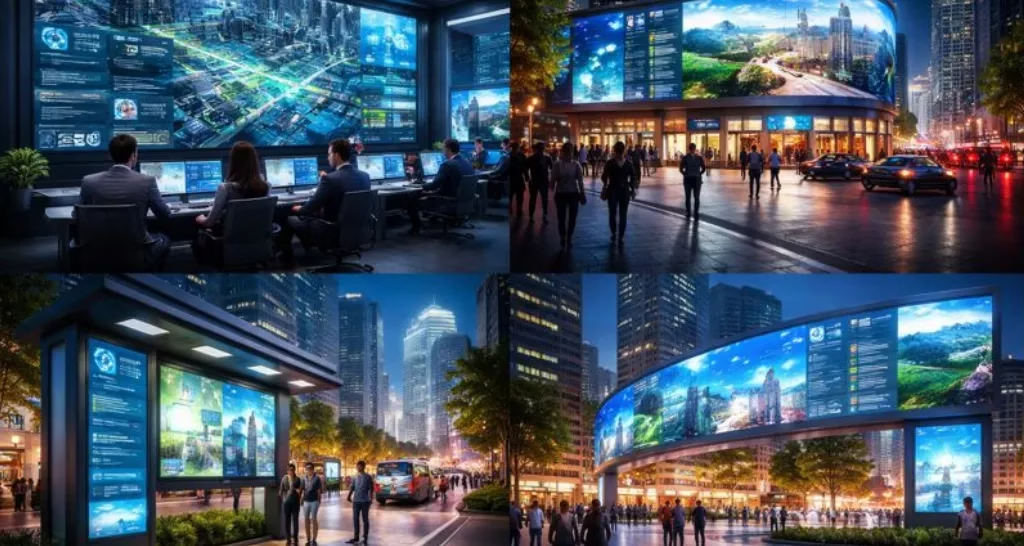
Smart cities are no longer defined only by physical infrastructure such as roads, utilities, and public buildings. As urban systems become more connected, the way information is surfaced, shared, and acted upon has become central to how cities function on a daily basis.
In this context, Video Walls in Smart Cities have become part of the digital infrastructure that supports day to day urban operations. Their purpose is not visual enhancement, but functional enabling awareness, coordination, and communication in environments where real time visibility is essential.
Role of Video Walls in Smart Cities
The role of Video Walls in Smart Cities is to act as a centralized visual layer that turns large volumes of urban data into shared, usable insight. They help city authorities monitor conditions, coordinate across systems, and respond effectively in real time.
As smart cities expanded their use of sensors, cameras, and monitoring platforms, the challenge shifted from collecting data to making it operationally useful. Video walls address this by bringing information from multiple systems into a single visual environment, reducing fragmentation and improving situational awareness. By replacing isolated screens and dashboards with a shared view, video walls support faster interpretation, better coordination, and more informed decision making across city functions.
Where are Video Walls used in Smart Cities?
Video Walls in Smart Cities are deployed across urban environments where continuous visibility, coordination, and clear communication are required. Their deployment is focused on locations that support citywide operations, public movement, and information delivery at scale.
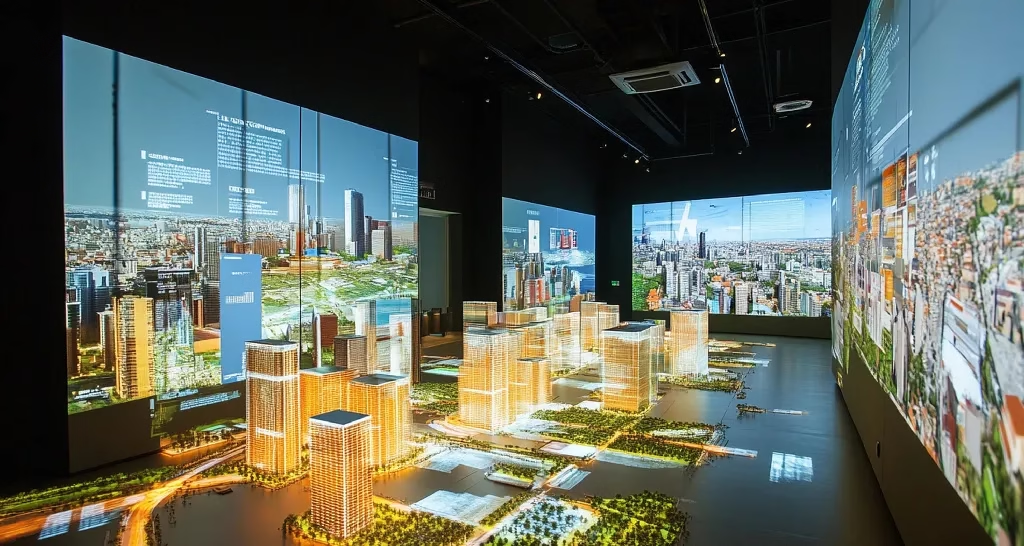
1. Command and Control Centres
Command and control centers rely on video walls to monitor multiple city systems simultaneously, including transport networks, public safety, utilities, and emergency services. In these environments, video walls serve as a shared visual reference, allowing teams to observe conditions across the city in real time.
Many Video Walls in Smart Cities are designed for continuous operation in these centres, where reliability and visual clarity are essential. Their primary value lies in enabling coordination during high-pressure situations rather than in the display hardware itself.
2. Traffic & Mobility Operations
Traffic and mobility management is another core area where video walls are widely used. Cities deploy video walls to visualize live traffic feeds, congestion patterns, route maps, and incident alerts from across transport networks.
By presenting mobility data within a single operational view, video walls for smart cities help authorities maintain situational awareness across major corridors. This supports both day to day traffic oversight and coordinated responses during peak hours, disruptions, or large public events.
3. Public Information & Civic Communication
Video walls are commonly installed in transport hubs, civic buildings, and public squares to display service updates, advisories, wayfinding information, and city announcements.
As a digital display for smart cities, video walls allow information to be updated in real time, scheduled by location or time, and delivered in multiple languages. This makes video walls for public communication particularly effective in high footfall areas where timely and clear messaging is critical.
4. Managed Urban Advertising
Smart cities also use digital video walls in urban spaces as part of controlled advertising frameworks. Unlike traditional billboards, these displays allow commercial content to coexist with civic messaging in a regulated and structured manner.
Digital video walls for smart cities support time based content scheduling, ensuring that public advisories take priority while advertising is integrated without creating visual clutter. This approach enables revenue generation while maintaining consistency with urban design standards and communication policies.
In Kochi, India, a large video wall installed in the smart city’s command centre enables continuous monitoring and proactive city response, demonstrating how integrated visual systems support real time operations. (Source: Smartcitiesworld)
How do Video Walls Integrate with Smart City Systems?
Video walls function as a connecting layer between multiple smart city technologies rather than operating as standalone displays. Their effectiveness comes from how well they bring together information from different systems into a single, usable view.
When integrated with traffic sensors, surveillance networks, environmental monitoring tools, and public information platforms, video walls act as a visual interface for city operations. They present related data streams in a shared context, allowing teams to understand conditions across systems without switching between separate dashboards.
This integration improves coordination across city departments by providing a common reference point. With Video Walls in Smart Cities, teams can interpret information collectively rather than working in isolated systems, supporting faster responses and clearer communication across the urban digital ecosystem.
Types of Video Walls suitable for Smart Cities
Video walls are used in smart city environments because their technical capabilities support continuous operation, clear visibility, and system integration across varied urban settings. These features allow video walls to function reliably in both controlled indoor environments and open outdoor spaces where operational demands differ significantly.
Indoor Video Walls
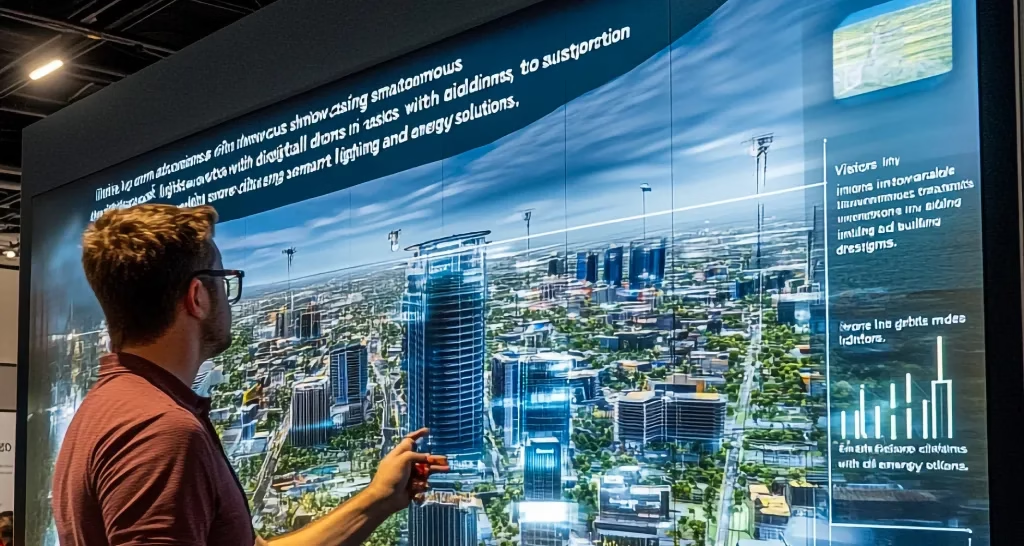
Indoor video walls are typically deployed in command and control rooms, operations centres, transport terminals, and civic buildings. These spaces require systems that can support detailed information display and uninterrupted operation.
Key technical features include:
- High pixel density and resolution, enabling clear visualization of maps, dashboards, and live data viewed at close range
- 24/7 operational reliability, designed for environments that require continuous monitoring
- Controlled brightness and low glare, supporting long viewing hours without visual fatigue
- Multi source input support, allowing simultaneous display of data from different city systems
These features make indoor video walls suitable for mission critical environments where clarity and reliability directly impact decision making.
Outdoor Video Walls
Outdoor video walls are deployed in public squares, transport interchanges, major intersections, and other high visibility urban locations. These installations must perform consistently under changing environmental and lighting conditions.
Key technical features include:
- High brightness output, ensuring readability in direct sunlight and varied daylight conditions
- Weather resistant construction, allowing operation in rain, heat, dust, and temperature fluctuations
- Wide viewing angles, supporting visibility across large public areas and varied sightlines
- Remote monitoring and control systems, enabling centralized management and maintenance
These technical capabilities make outdoor video walls suitable for public communication, advisories, and managed messaging in open urban environments.
Scalability with Video Walls in Smart Cities
Smart cities are designed to grow and evolve over time, often through phased development. As new systems are introduced and existing ones expand, digital infrastructure must scale without requiring frequent redesign or replacement.
LED Video Walls for Smart Cities support scalability through flexible system architecture rather than fixed installations. They allow cities to add new data sources as operations grow, expand display configurations to support additional functions, and adapt content formats as technologies evolve. Because many LED display solutions for urban development are modular by design, upgrades can be implemented incrementally.
This flexibility enables cities to scale monitoring, coordination, and communication capabilities in step with urban growth, making video walls suitable for long term, evolving smart city environments.
How do Video Walls deliver ROI for Smart City Spaces?
Smart city investments are typically assessed based on long term value rather than immediate cost. In this context, video walls contribute to ROI by improving how existing systems and data are utilized, rather than by introducing parallel infrastructure.
By centralizing information into a shared visual environment, video walls reduce inefficiencies caused by fragmented monitoring and delayed responses. Faster decision making, improved coordination across departments, and reduced downtime during incidents translate into measurable operational savings over time.
In many cases, LED video walls for smart cities extend the effectiveness and lifespan of urban systems by maximizing the value of data cities already collect, supporting sustained returns across the lifecycle of smart city infrastructure.
Lightomated LED video walls are an exceptional choice for smart cities and modern infrastructure, supporting real time operations, public communication, and large scale urban environments with reliability and clarity.