What Is Color Calibration in LED Video Wall Displays?
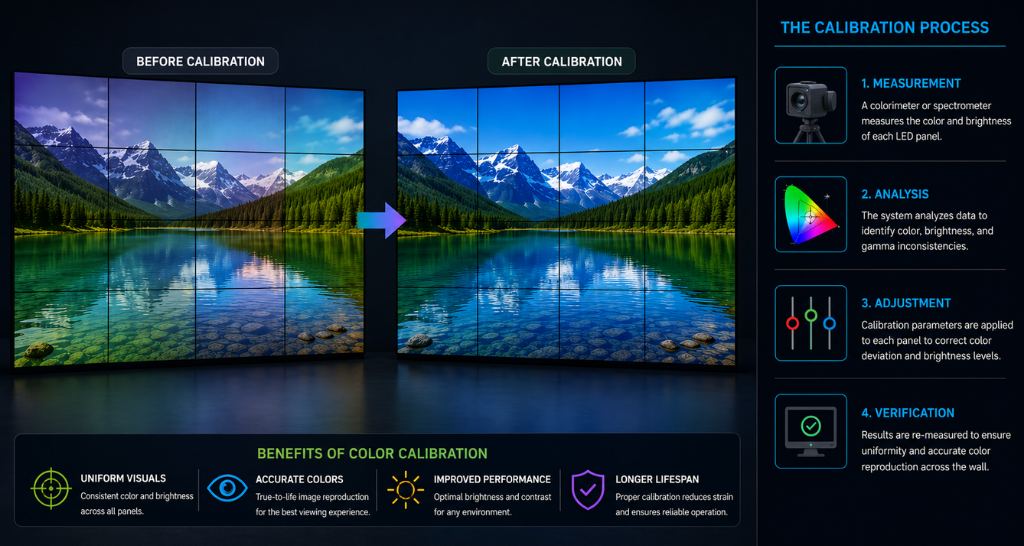
visual communication has become a powerful tool for businesses, control rooms, retail spaces, entertainment venues, and public environments. An LED Video Wall delivers high-impact visuals, but achieving a truly professional display experience requires more than just installing LED panels. One of the most important processes that ensures accurate and consistent visuals is color calibration.
LED Video Wall color calibration helps maintain uniform brightness, color accuracy, and image quality across every module and panel. Without proper calibration, displays may show uneven colors, brightness differences, or inconsistent visuals that affect the overall viewing experience.
A professional display color calibration process ensures that every LED module works together as one seamless screen. Whether used in command centers, corporate spaces, stadiums, or commercial environments, proper calibration improves clarity and creates a more realistic visual output.
What Is Color Calibration in LED Video Wall Displays?
Color calibration is the process of adjusting an LED display system to achieve accurate and consistent colors across the entire screen. During installation, individual LED modules may have small differences in brightness and color output due to manufacturing variations, usage time, or environmental conditions.
The LED screen color adjustment process corrects these differences by balancing important display parameters such as:
- Brightness levels
- RGB color values
- Gamma settings
- Contrast ratio
- Pixel uniformity
- Color temperature
In simple words, calibration makes sure every part of an LED Video Wall displays the same shade, brightness, and image quality.
For example, if one section of a large display appears slightly darker or has a different shade of white compared to another section, calibration adjusts the settings to create a smooth and uniform viewing experience.
Why Is LED Video Wall Color Calibration Important?
A large-format display contains thousands or even millions of LED pixels. Even small differences between pixels can become noticeable when viewed on a bigger screen. This is why regular calibration is essential.
1. Maintains Visual Uniformity
One of the biggest advantages of calibration is consistent image quality. A properly calibrated LED Video Wall ensures that every panel produces the same brightness and color output.
Without calibration, viewers may notice:
- Patchy colors
- Uneven brightness
- Visible panel differences
- Poor image quality
Calibration creates a seamless display where separate panels appear like one continuous screen.
2. Improves Color Accuracy
Accurate colors are essential for advertising, broadcasting, presentations, and digital experiences.
The LED video wall color calibration process ensures that colors appear closer to their original source. For example:
- Brand colors remain consistent
- Images look more realistic
- Videos appear more natural
- Content quality improves
This is especially important for industries where visual accuracy matters.
3. Increases Display Lifespan
LED modules naturally experience changes over time. Continuous operation can cause brightness reduction or color shifts.
Regular calibration helps balance these changes and allows the display to maintain performance for a longer period.
How Does Color Calibration Work?
The calibration process involves multiple technical steps to measure and adjust display performance.
Step 1: Measuring Current Display Performance
The first step involves analyzing the existing output of the LED display.
Specialized calibration tools measure:
- Brightness
- Color temperature
- RGB values
- Pixel performance
This creates a reference point for adjustments.
Step 2: Adjusting Brightness and Color Levels
Each LED module is adjusted to match the required brightness level.
The system balances red, green, and blue values so all pixels produce accurate colors.
This LED screen color adjustment process ensures smooth transitions and natural visuals.
Step 3: Applying Calibration Data
After measurements, correction data is applied through the display control system.
The receiving cards and processing units store these correction values, allowing each module to produce optimized output.
Step 4: Final Testing
After calibration, technicians test the display using different content types:
- Images
- Videos
- Text
- Color patterns
This confirms that the entire LED Video Wall performs consistently.
LED Video Wall With Color Calibration vs Without Calibration
| With Color Calibration | Without Color Calibration |
|---|---|
| Uniform brightness across panels | Uneven brightness levels |
| Accurate and consistent colors | Color differences between modules |
| Professional visual experience | Poor image appearance |
| Better long-term performance | Faster visual degradation |
| Smooth video playback | Inconsistent visuals |
Components and Technologies Used in Calibration
LED Modules
LED modules are the basic building blocks of a display. Calibration ensures every module produces matching brightness and color output.
Receiving Cards
Receiving cards control image data sent to individual LED modules. They store calibration parameters and help maintain accurate output.
Video Processor
A video processor manages incoming content and optimizes image quality before sending it to the display and Audio visual integration combines display, sound, control, and communication technologies to create seamless, high-quality experiences for businesses and professional spaces.
Calibration Software
Advanced software analyzes display performance and applies correction settings automatically.
Measuring Equipment
Professional calibration tools use cameras and sensors to measure real-time display output.
Facts and Figures :
- LED displays can operate for more than 100,000 hours depending on usage and maintenance.
- Large LED Video Wall installations may contain millions of individual pixels.
- Even a small brightness difference between modules can become visible on large displays.
- Regular calibration helps maintain consistent performance throughout the display lifecycle.
- Modern calibration systems can automatically adjust thousands of LED modules within a short time.
How Lightomated Helps Organizations
Lightomated provides advanced LED display solutions designed for professional environments where image quality and reliability matter. The company focuses on delivering high-performance LED Video Wall solutions with proper installation, configuration, and display optimization.
With expertise in indoor and outdoor LED displays, Lightomated helps organizations achieve better visual communication through advanced display technologies. Their solutions support applications such as corporate spaces, control rooms, command centers, retail environments, and large public installations.
By ensuring accurate setup and performance, Lightomated helps businesses create impactful visual experiences with reliable LED display systems.